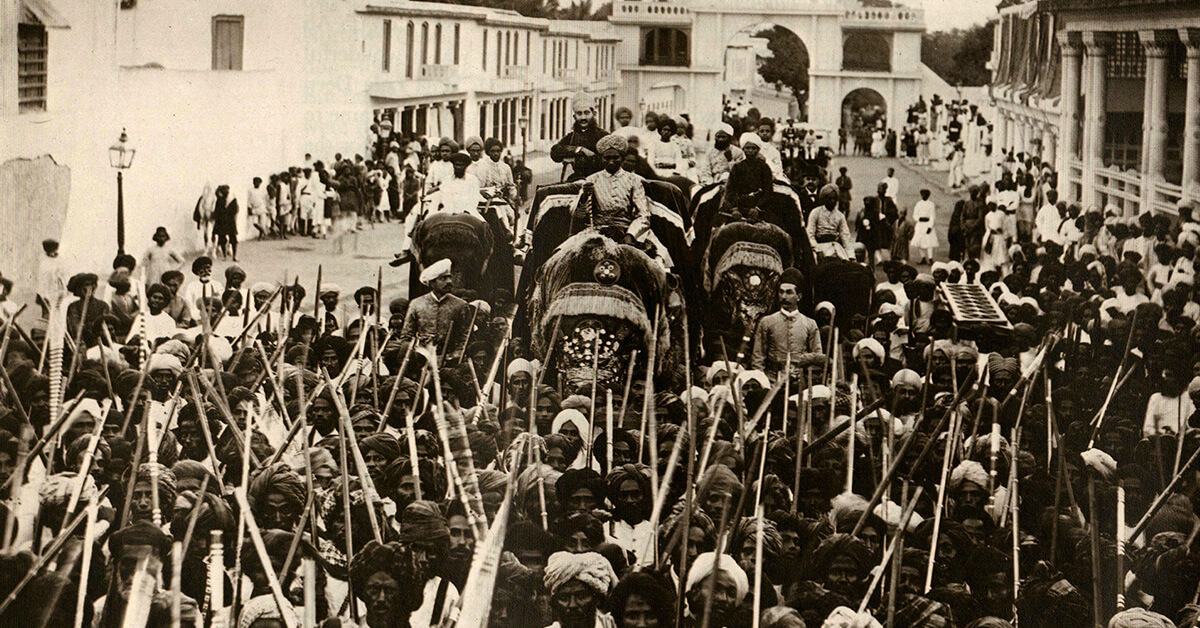
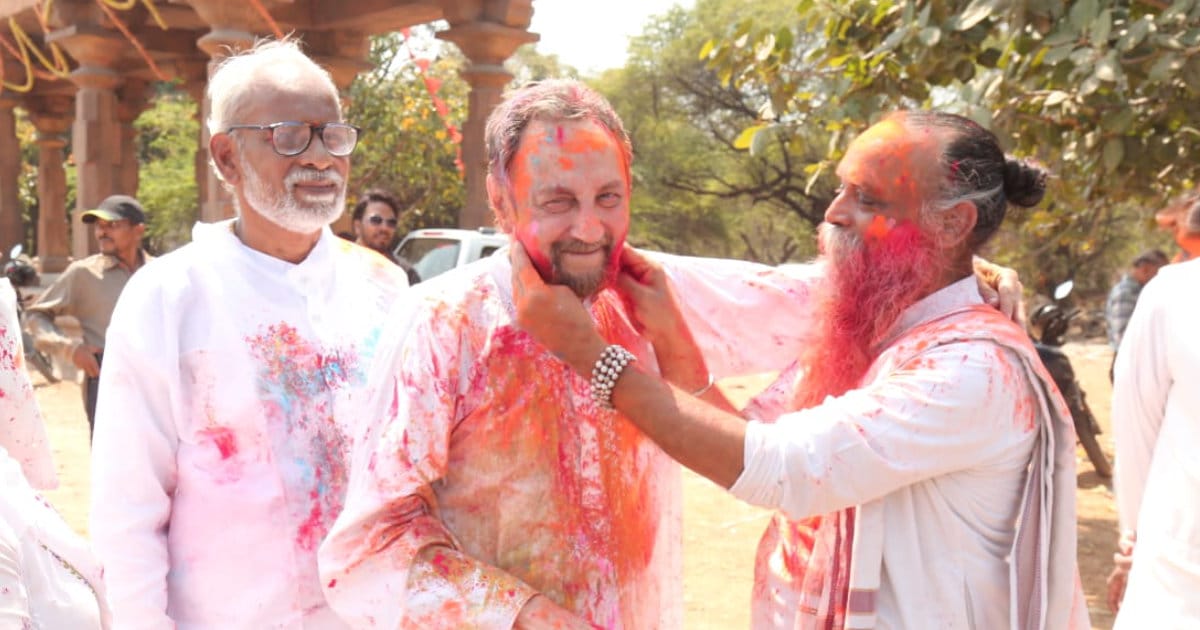
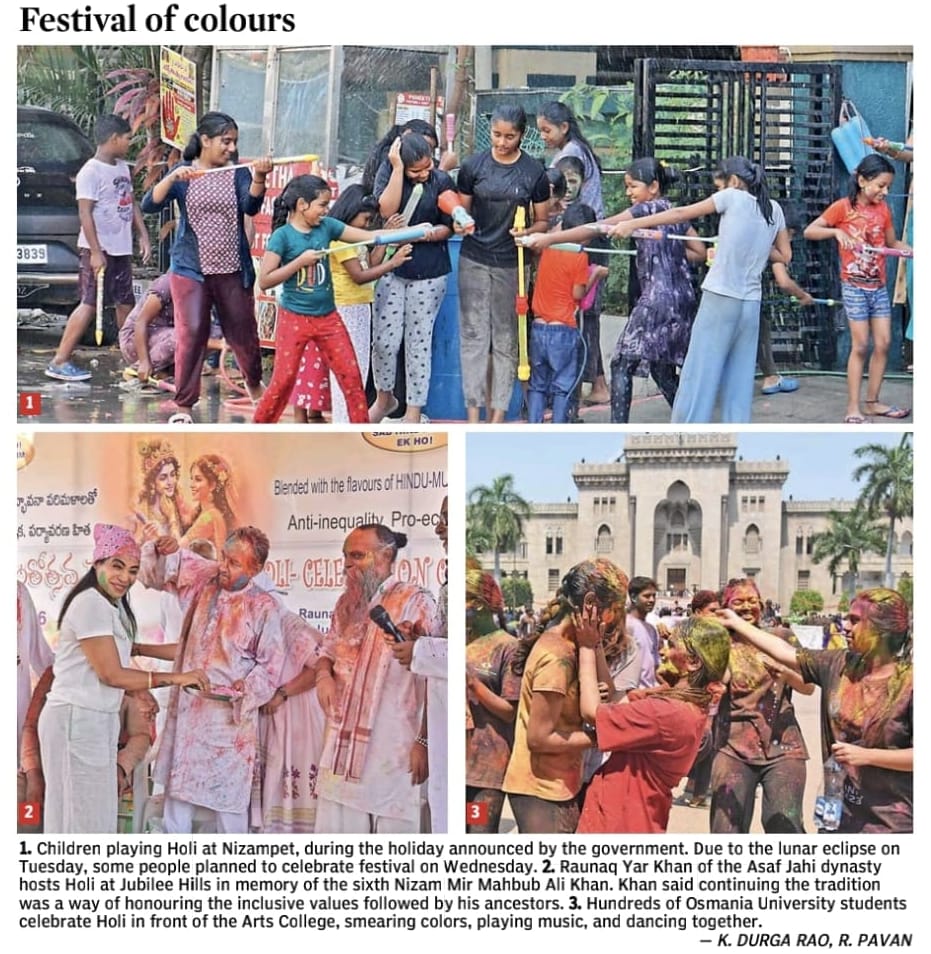
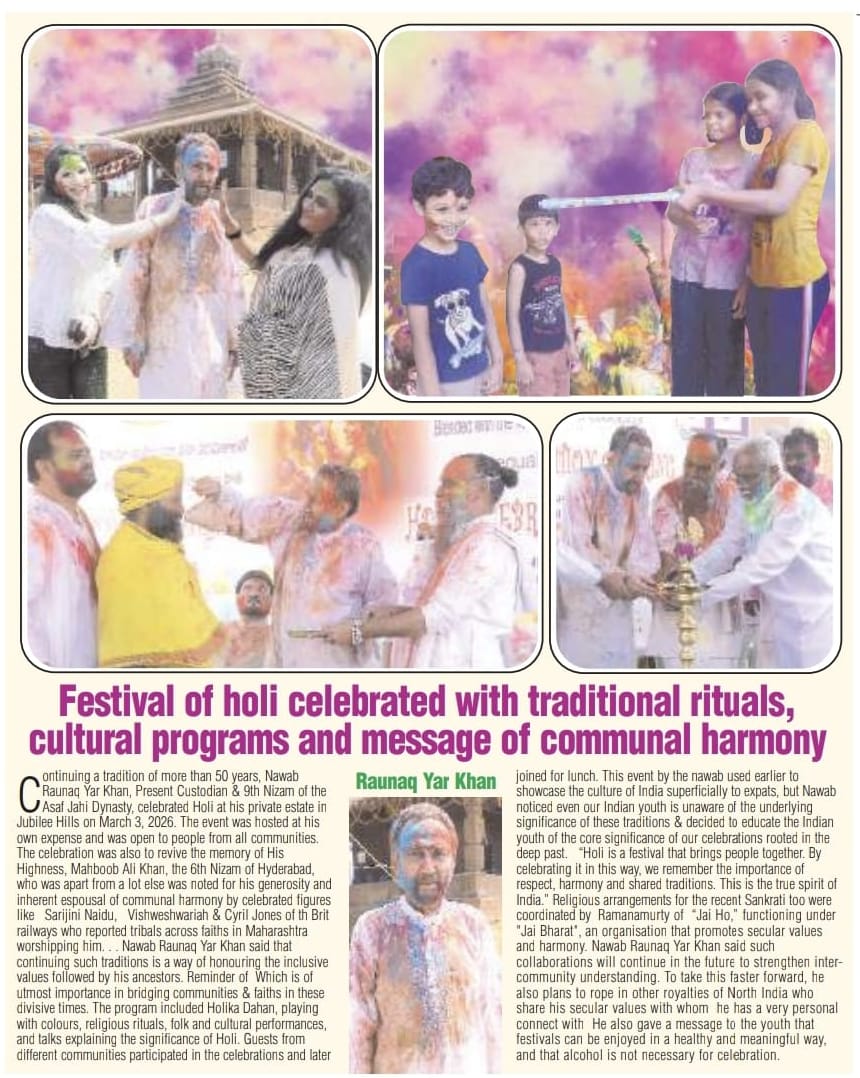
On Tuesday, March 3, 2026, the estate of Nawab Raunaq Yar Khan in Jubilee Hills, Hyderabad, became the setting for an event that has been observed at this address for more than half a century. The annual Holi celebration hosted by the Symbolic Custodian of the Asaf Jahi legacy is not a recent initiative. It is a living continuation of a tradition that has welcomed guests from different communities, different faiths, and increasingly, from different parts of the world, to join together in one of India’s most universally recognisable festivals of renewal and colour.
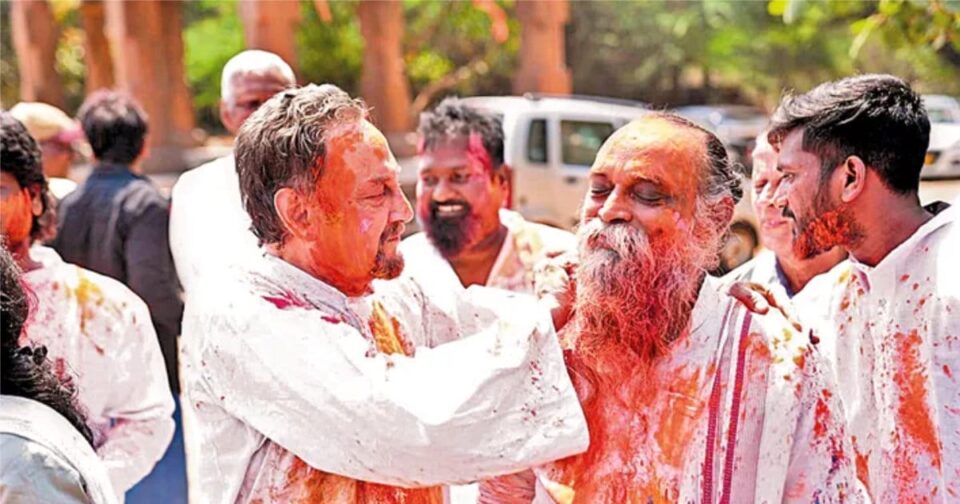
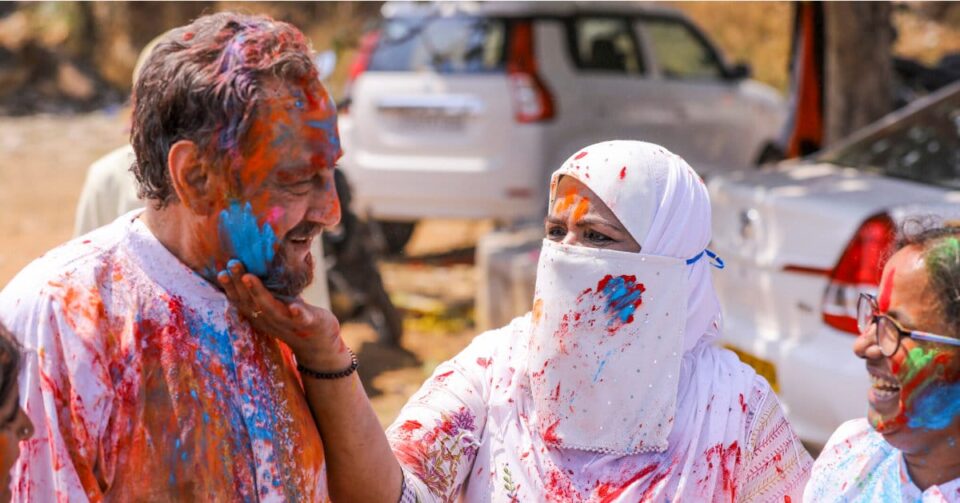
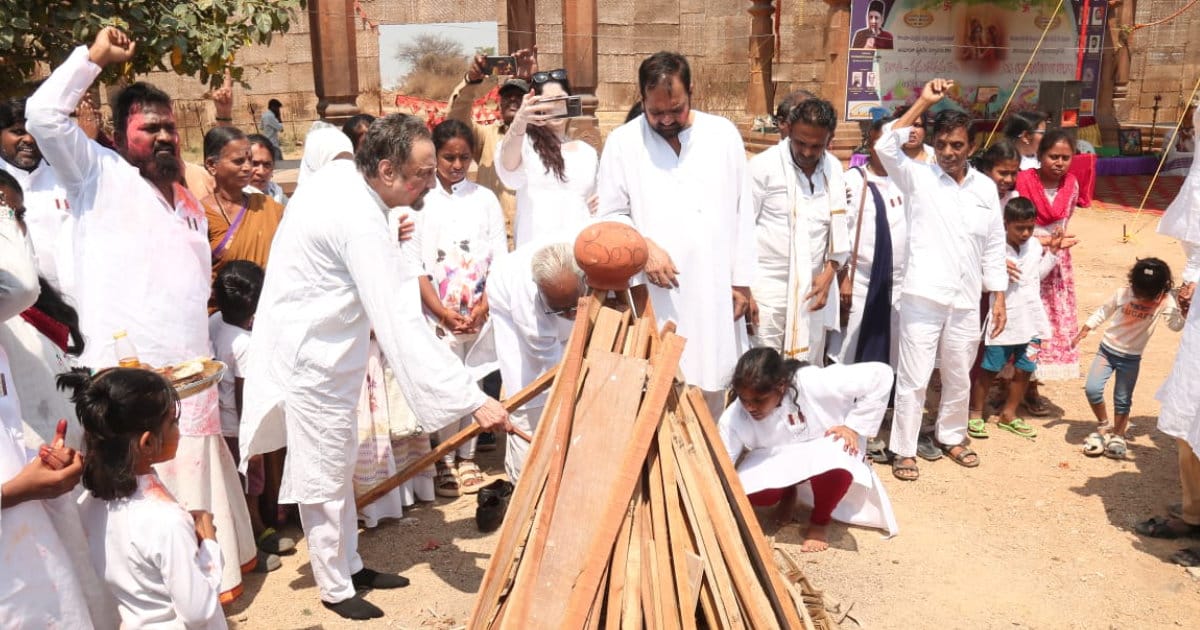
This year’s gathering at H.I.G.H, Road No. 5, Jubilee Hills, carried its familiar elements – Holika Dahan, the playing of colours, a community lunch, folk performances, religious rituals, and reflective talks on the significance of Holi – while also reflecting the broadening of the event’s reach. Supported this year by JaiHo under the Jai Bharat platform, with V. Ramanamurthy coordinating the religious aspects, the celebration drew together guests from across communities and continued its emphasis on what Nawab Raunaq Yar Khan has described as a revival of the secular traditions associated with the Nizam era.
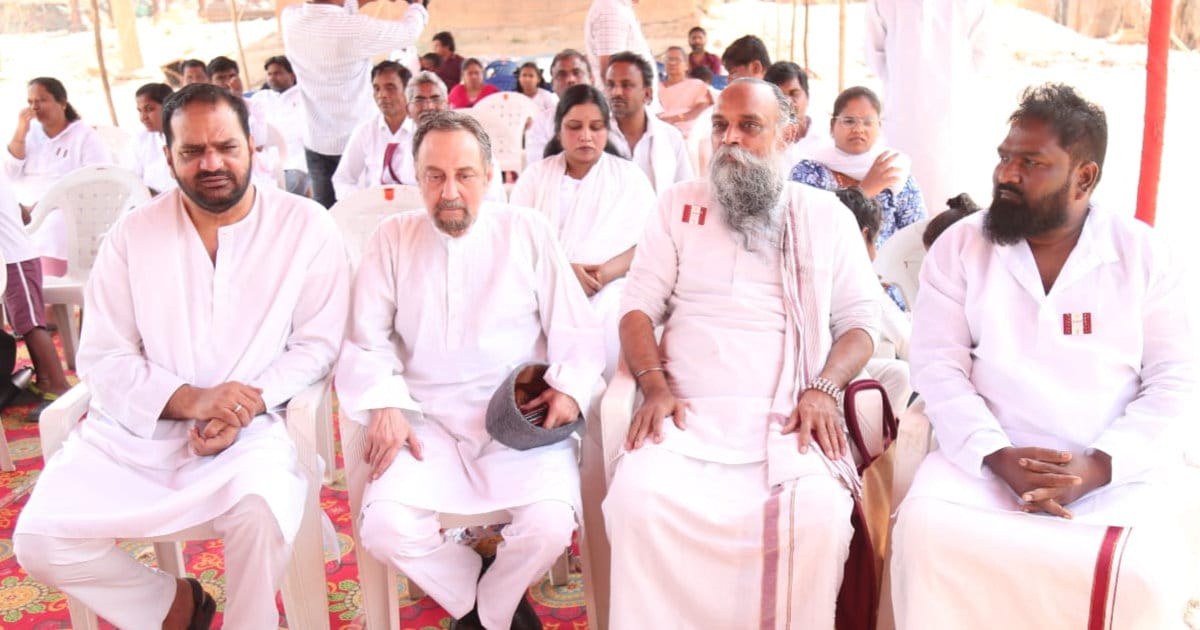
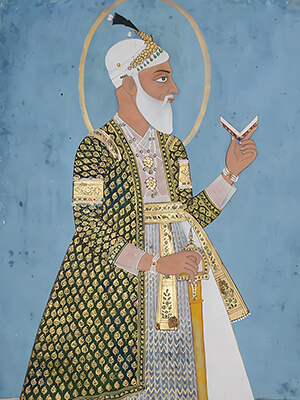
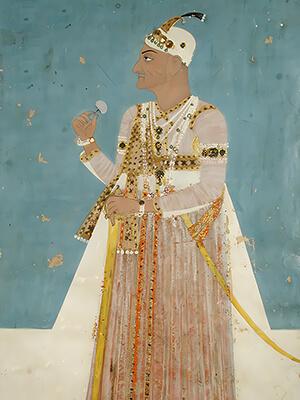
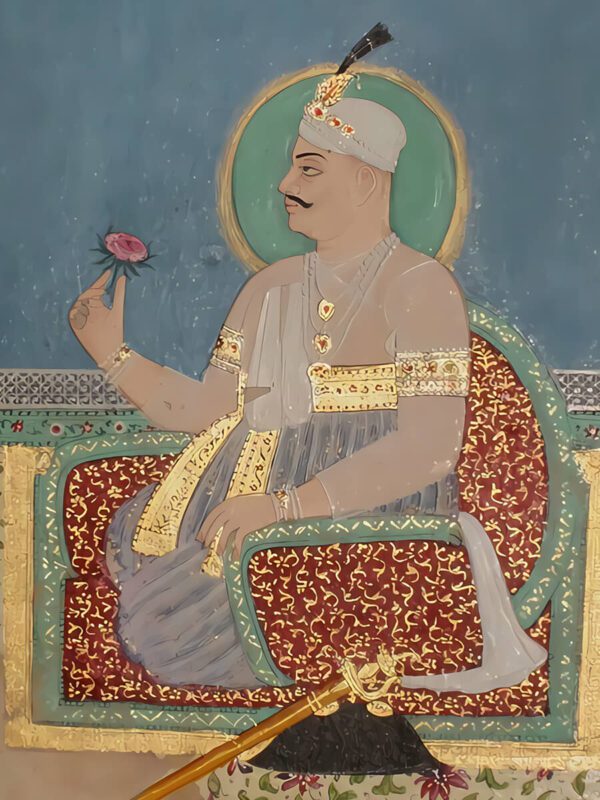
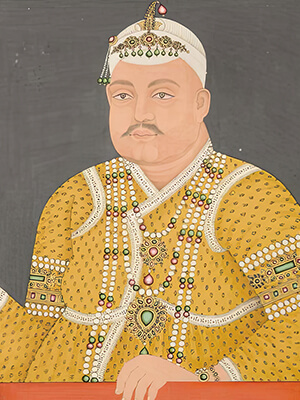
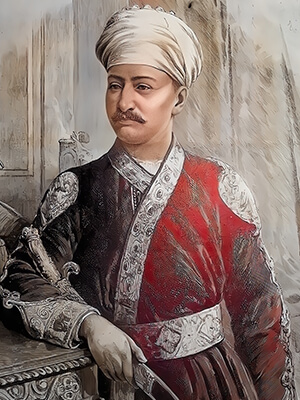
At the heart of that revival is a deliberate act of memory – a recalling of the values that Mir Mahboob Ali Khan, the VI Nizam of Hyderabad, embodied in his stewardship of a city defined by its plural identity. In hosting this celebration, Nawab Raunaq Yar Khan does not merely observe a festival. He sustains a cultural argument – that Hyderabad’s tradition of communal harmony was not accidental, and that it deserves to be consciously continued.
Holi in the City of the Nizams – A History of Shared Celebration
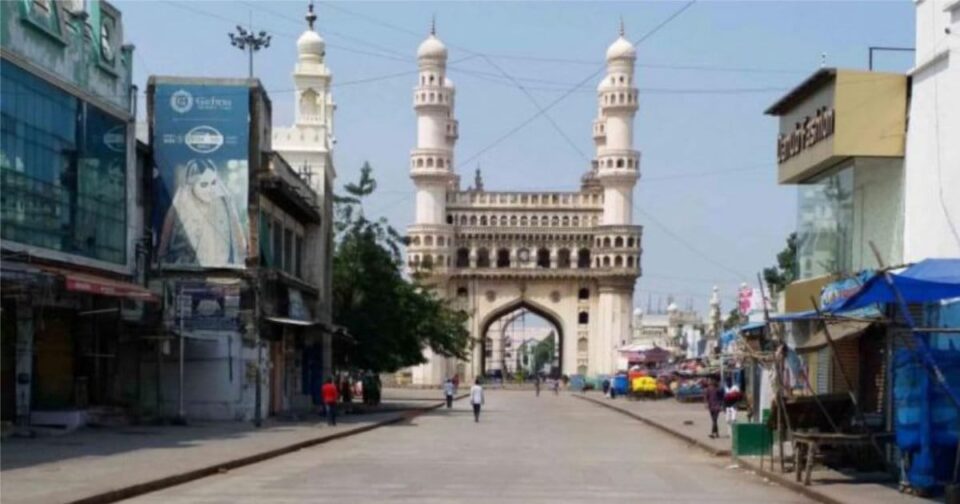
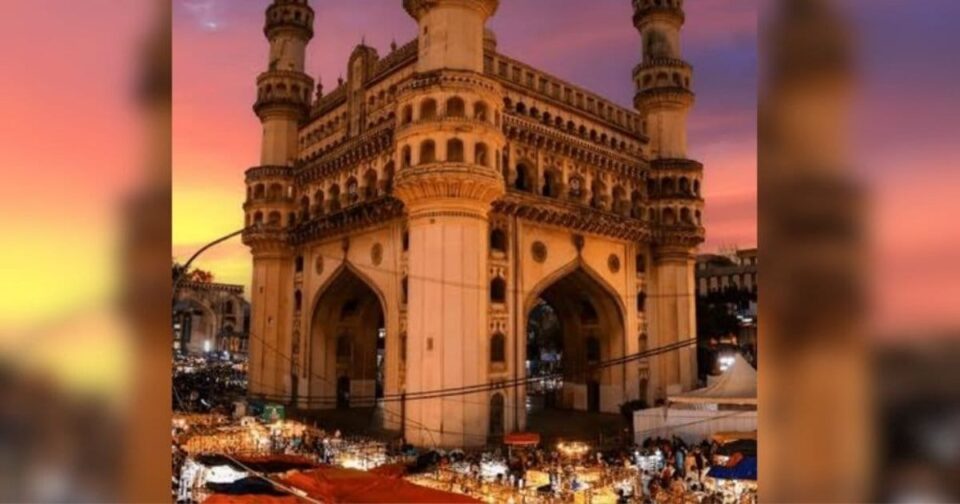
Holi has been celebrated across the Indian subcontinent for millennia. Its origins lie in ancient traditions of seasonal renewal, the arrival of spring, and the triumph of devotion over adversity. The festival carries within it layers of myth, ritual, agricultural memory, and social meaning that vary across regions, communities, and time. In Hyderabad, as in many of the great cities of the Deccan, Holi was never the exclusive observance of any single community. It was a public festival – one in which the spirit of colour and joy crossed the boundaries of neighbourhood, caste, and religion with a naturalness that the city’s culture had come to take for granted.
Mir Mahboob Ali Khan, who ruled as the VI Nizam from 1869 to 1911, is remembered with particular warmth in Hyderabad’s popular memory as a figure who embodied this inclusive spirit with exceptional personal warmth. His interactions with the city’s diverse communities, his accessibility to people of different backgrounds, and his genuine engagement with the cultural life of a plural city set a standard that subsequent generations have continued to cite as an expression of what enlightened governance in a diverse society can look like. It is this memory that Nawab Raunaq Yar Khan invokes when he frames the annual Holi celebration as an act of revival – a deliberate reaching back to an example that the present can draw upon.
Fifty Years of Continuity at Jubilee Hills
What makes the Holi celebration at H.I.G.H distinctive, beyond its historical resonances, is its longevity. A tradition of more than fifty years is not a recent programme. It is not a response to a contemporary moment or an initiative designed to make a statement about present circumstances. It is simply something that has been done, year after year, at this address, through different eras and different social climates. That continuity is itself a form of testimony – evidence that the commitment to bringing communities together around a shared celebration has remained constant even as much else around it has changed.
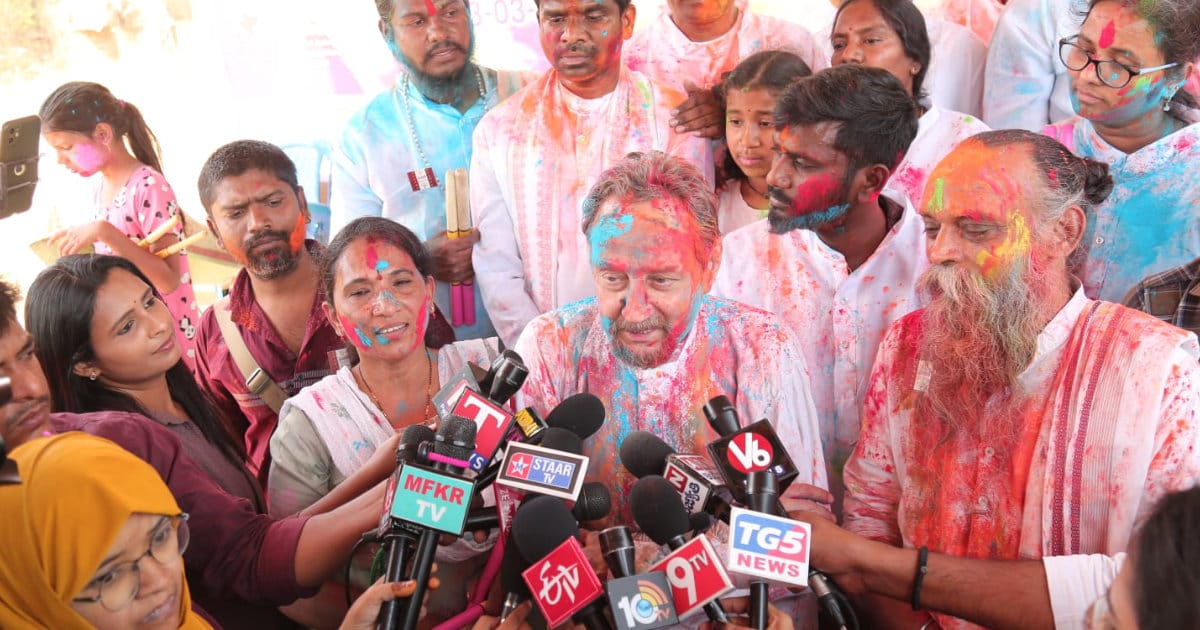
Nawab Raunaq Yar Khan has spoken of this continuity in terms that emphasise its cultural rather than its personal significance. The celebration is open to people from all communities – an invitation that is both literal, in the sense that guests from different religious and social backgrounds are genuinely welcomed, and symbolic, in that the openness of the invitation reflects a conception of festive life in which participation is not contingent on shared identity. The community lunch that follows the morning’s celebrations is perhaps the clearest expression of this conception – the shared table as the most fundamental arena of human connection.
In recent years, the event has extended its reach to include expatriates and younger participants encountering Indian cultural traditions for the first time, or returning to them after periods of distance. This dimension of the celebration reflects an awareness that cultural traditions do not sustain themselves automatically – they require transmission, explanation, and the kind of direct experience that no amount of written description can fully replicate. The inclusion of talks on the significance of Holi serves exactly this educational purpose, grounding the celebration in its cultural and spiritual meaning for those who may be participating for the first time.
The Programme – Ritual, Performance, and Community
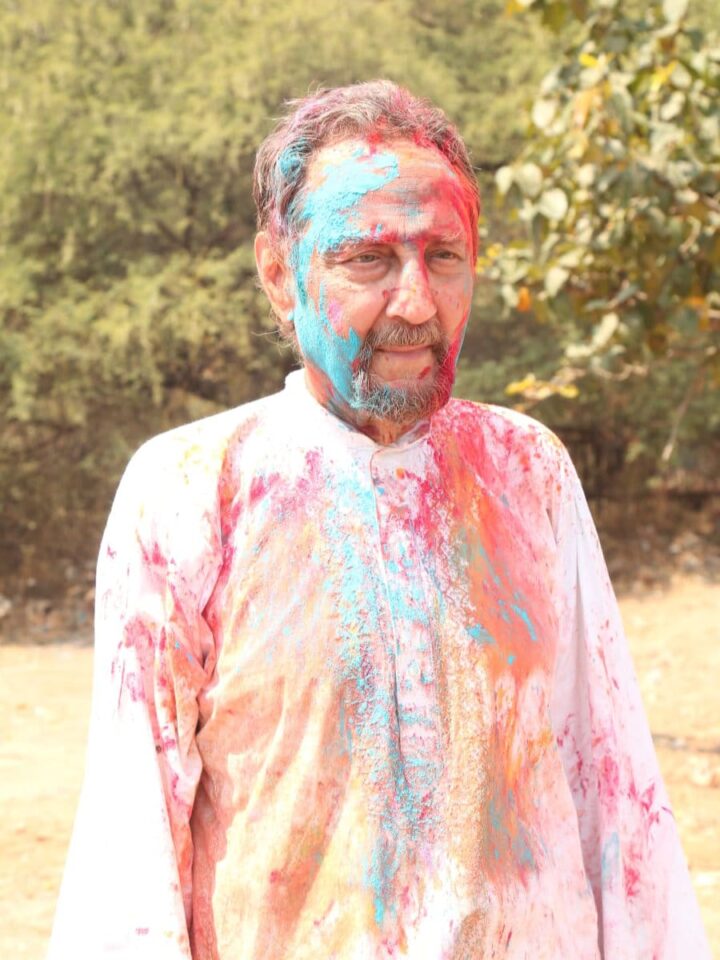
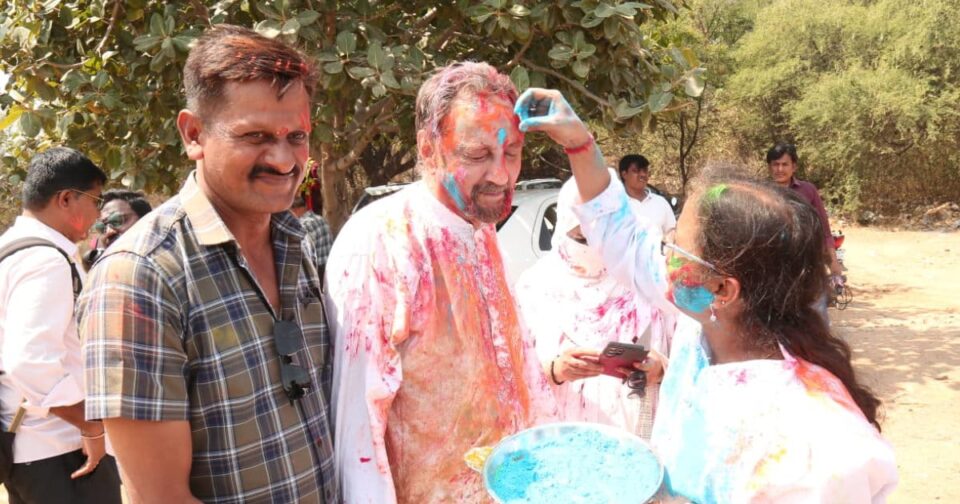
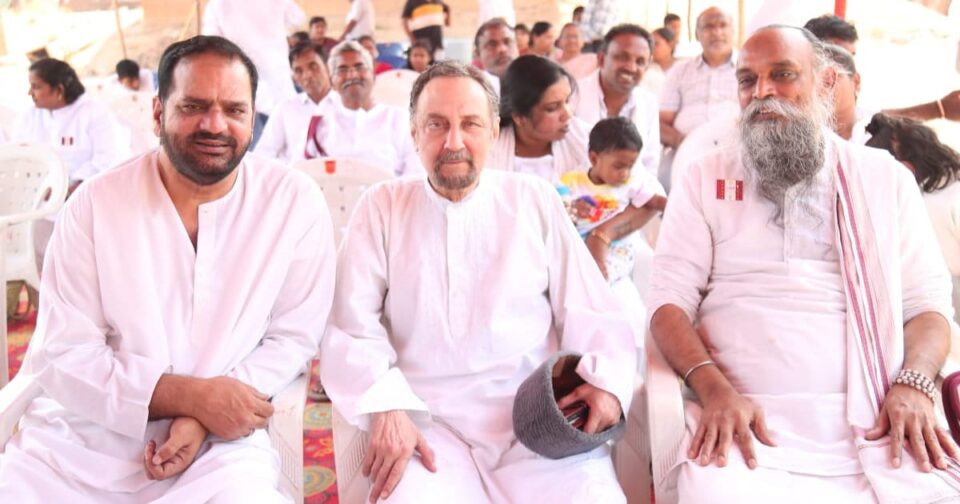
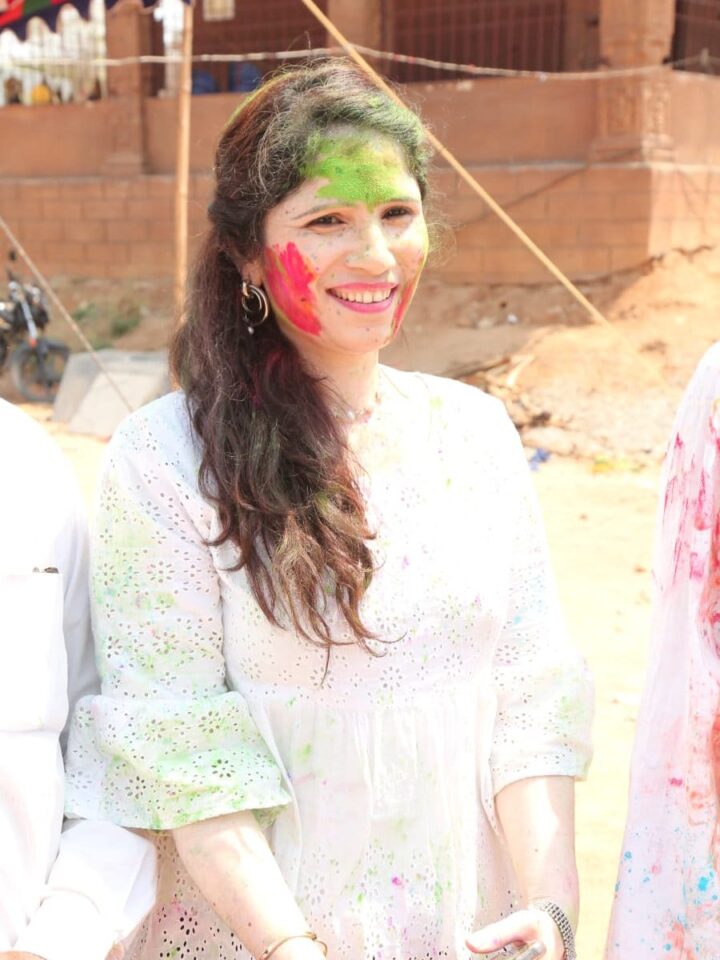
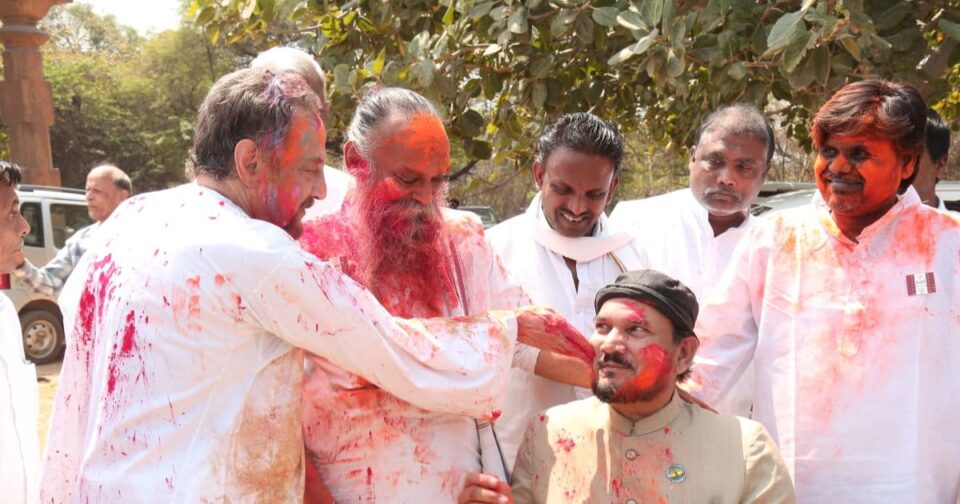
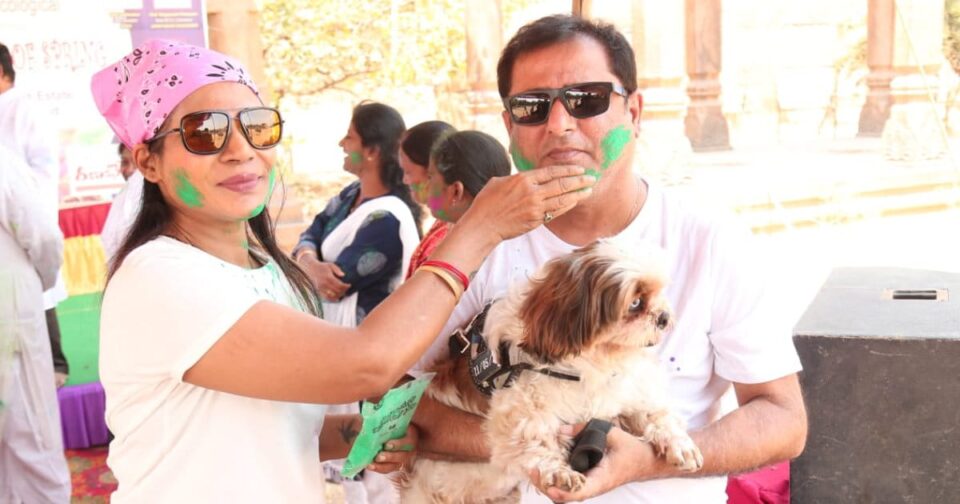
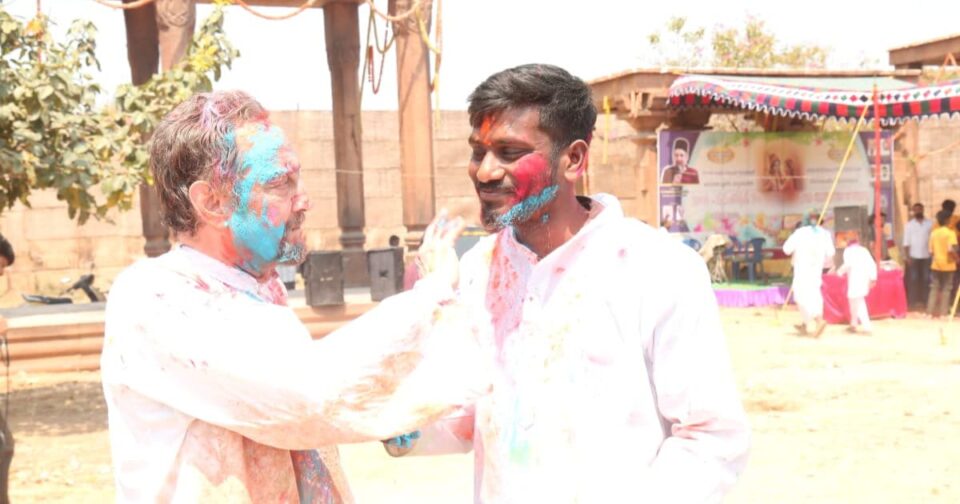
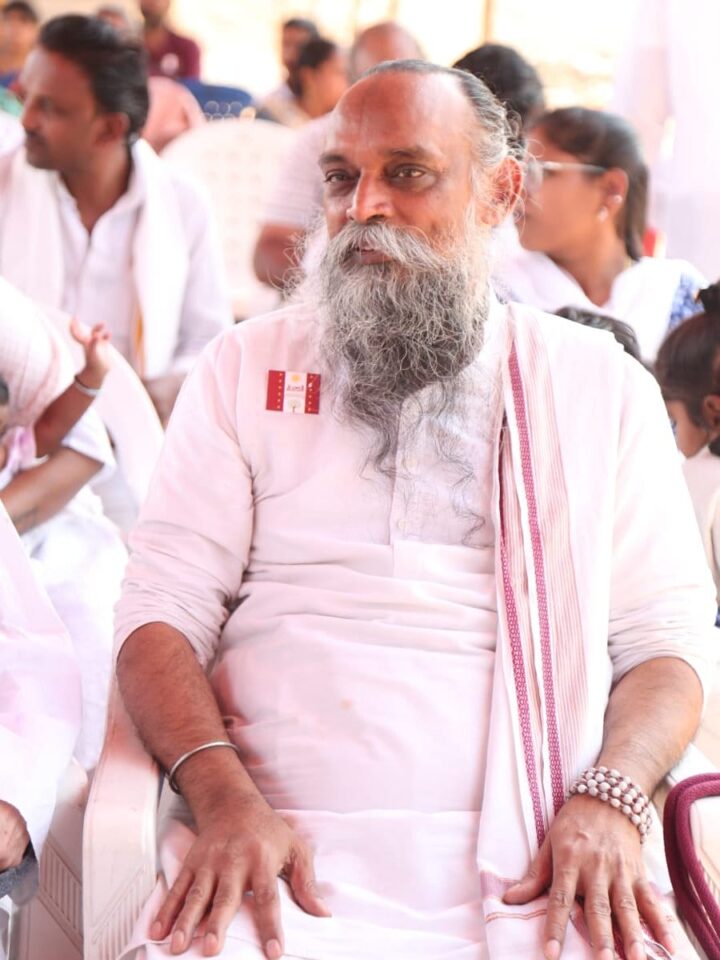
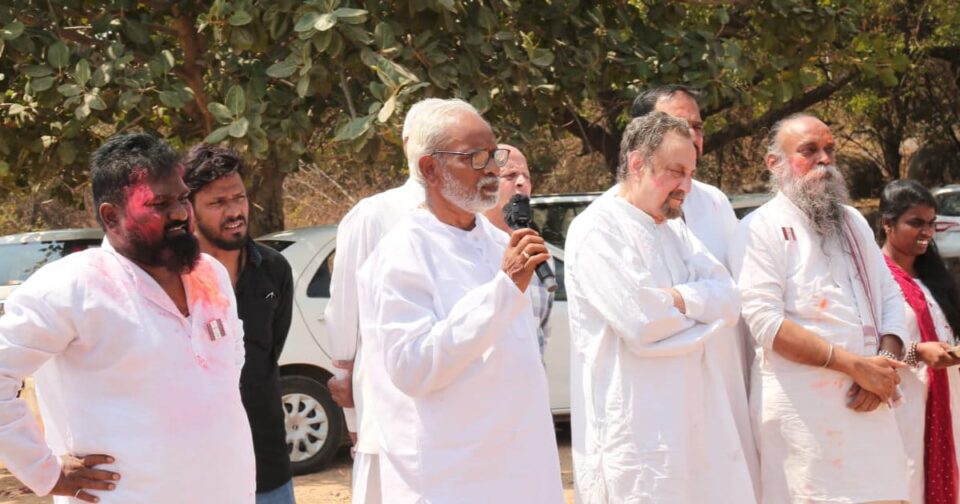
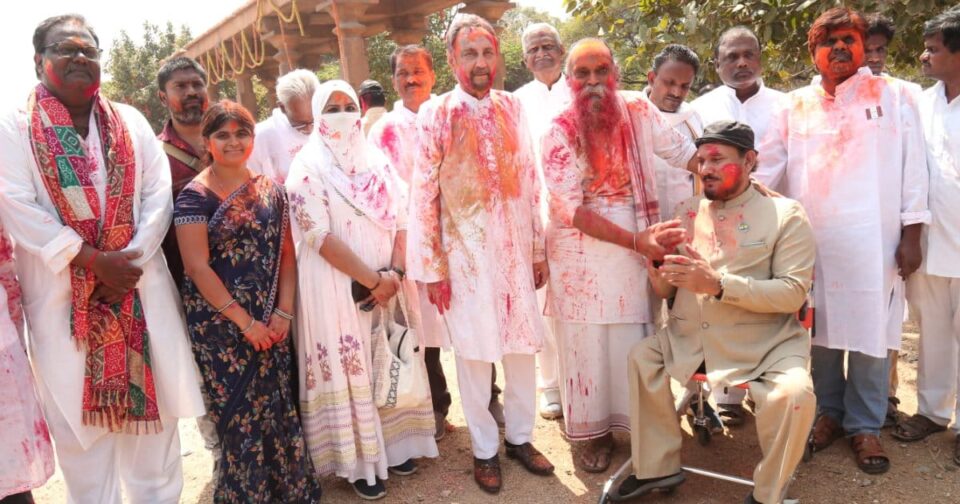
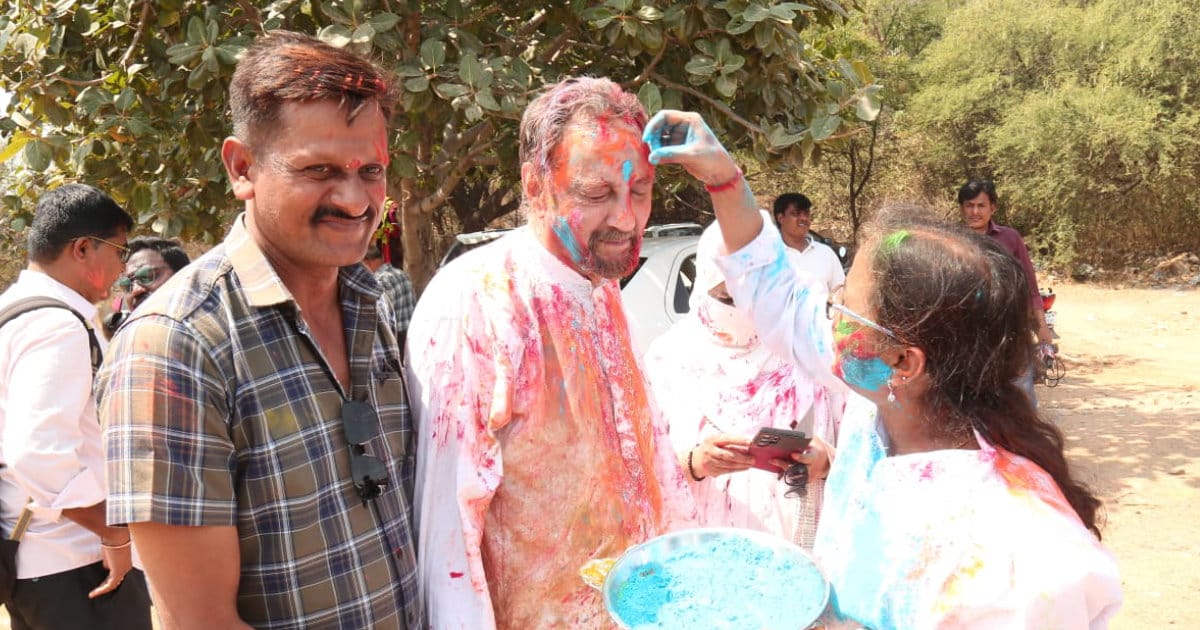
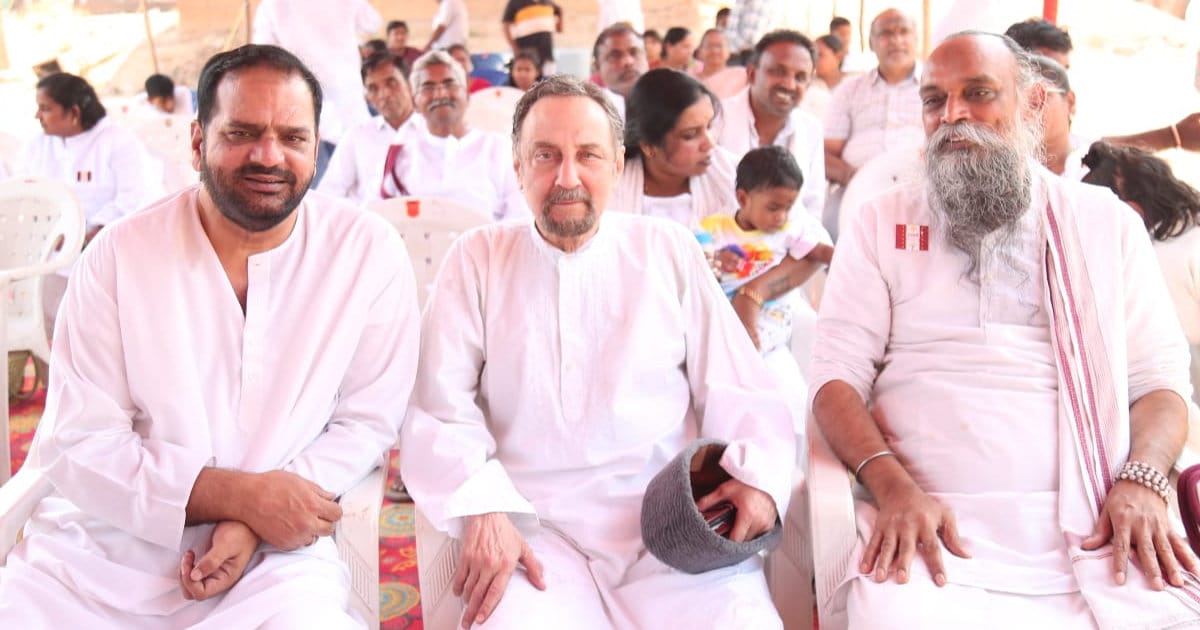
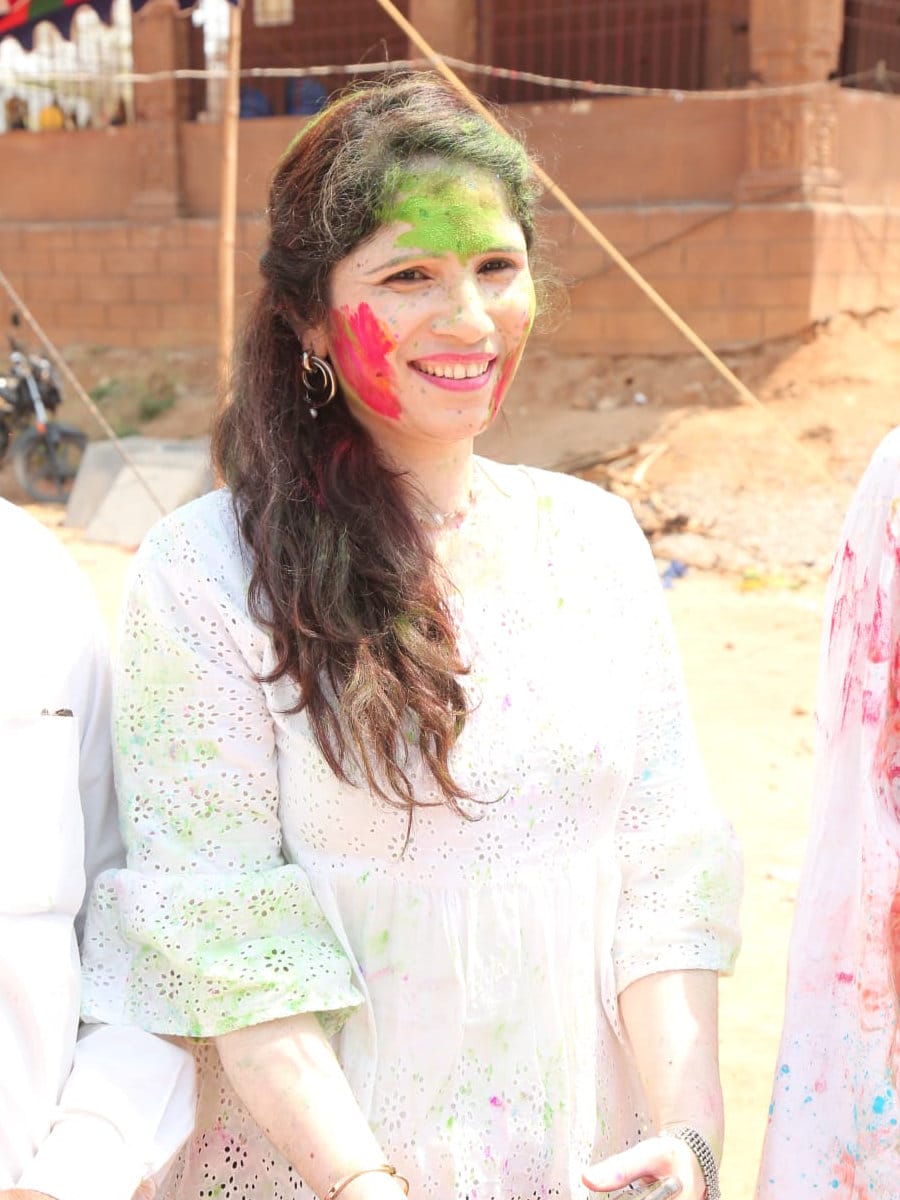
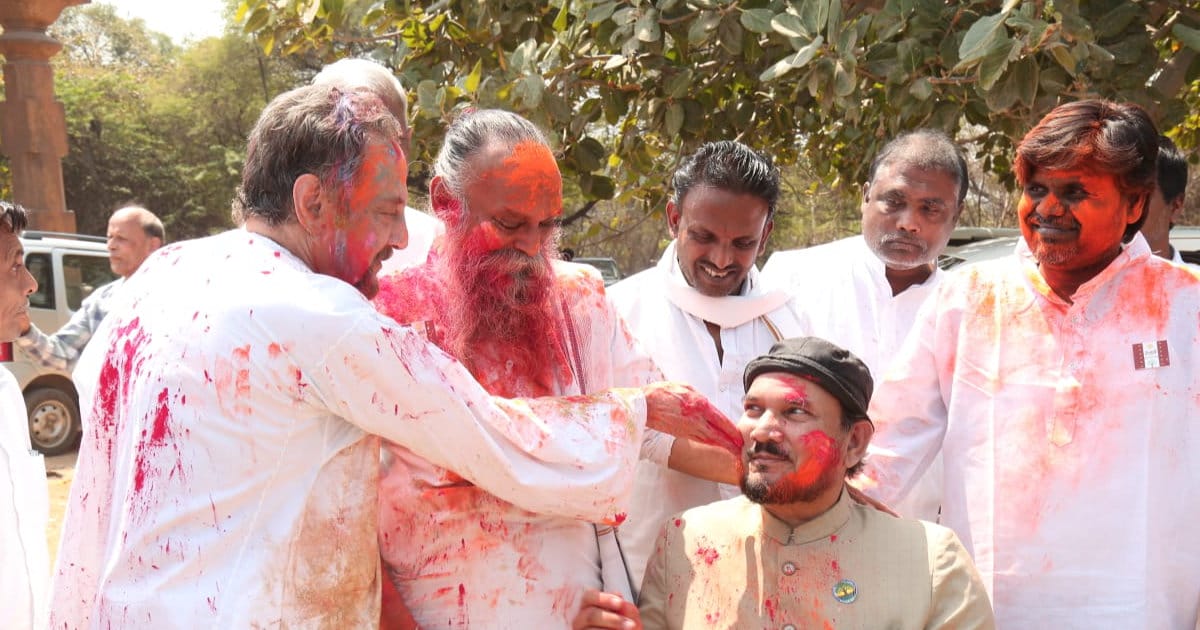
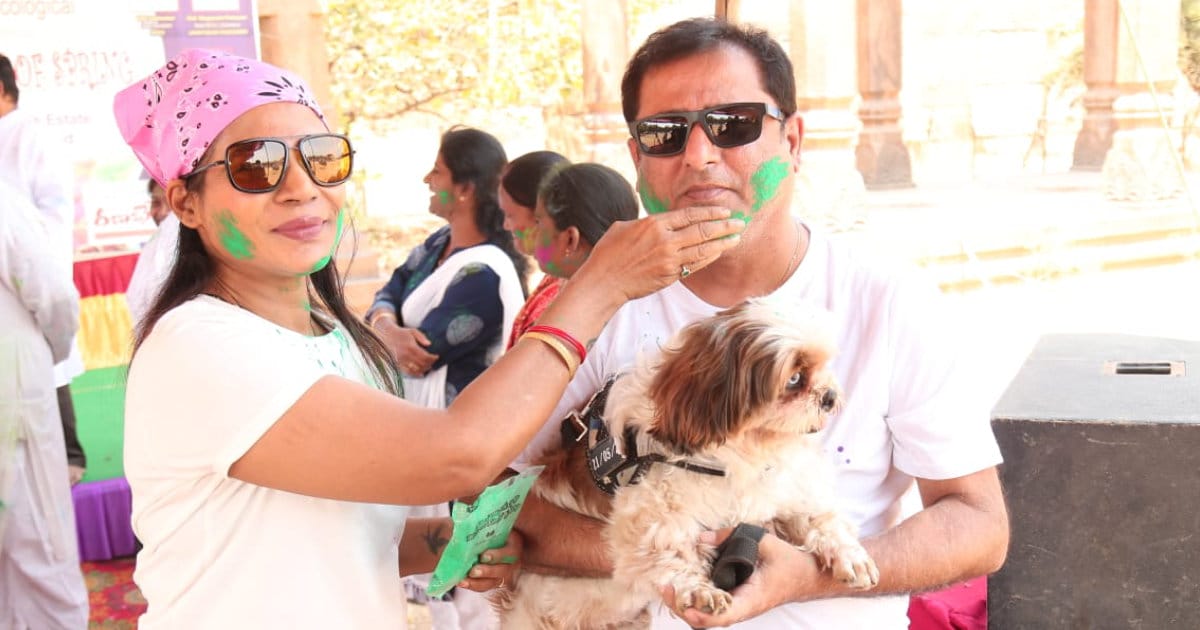
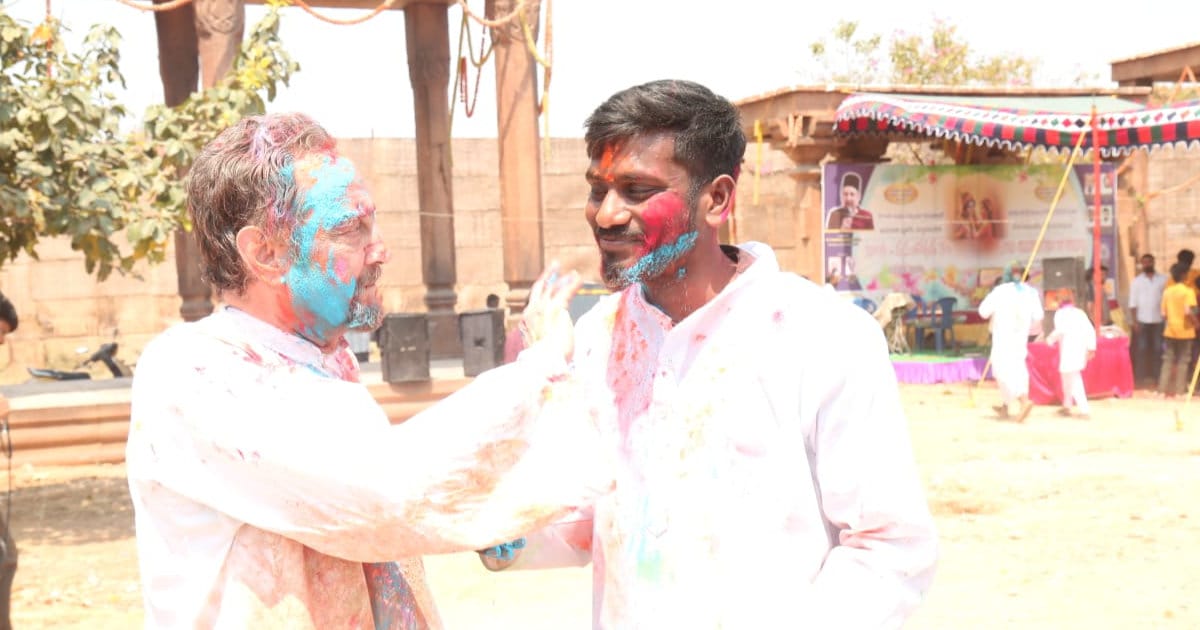
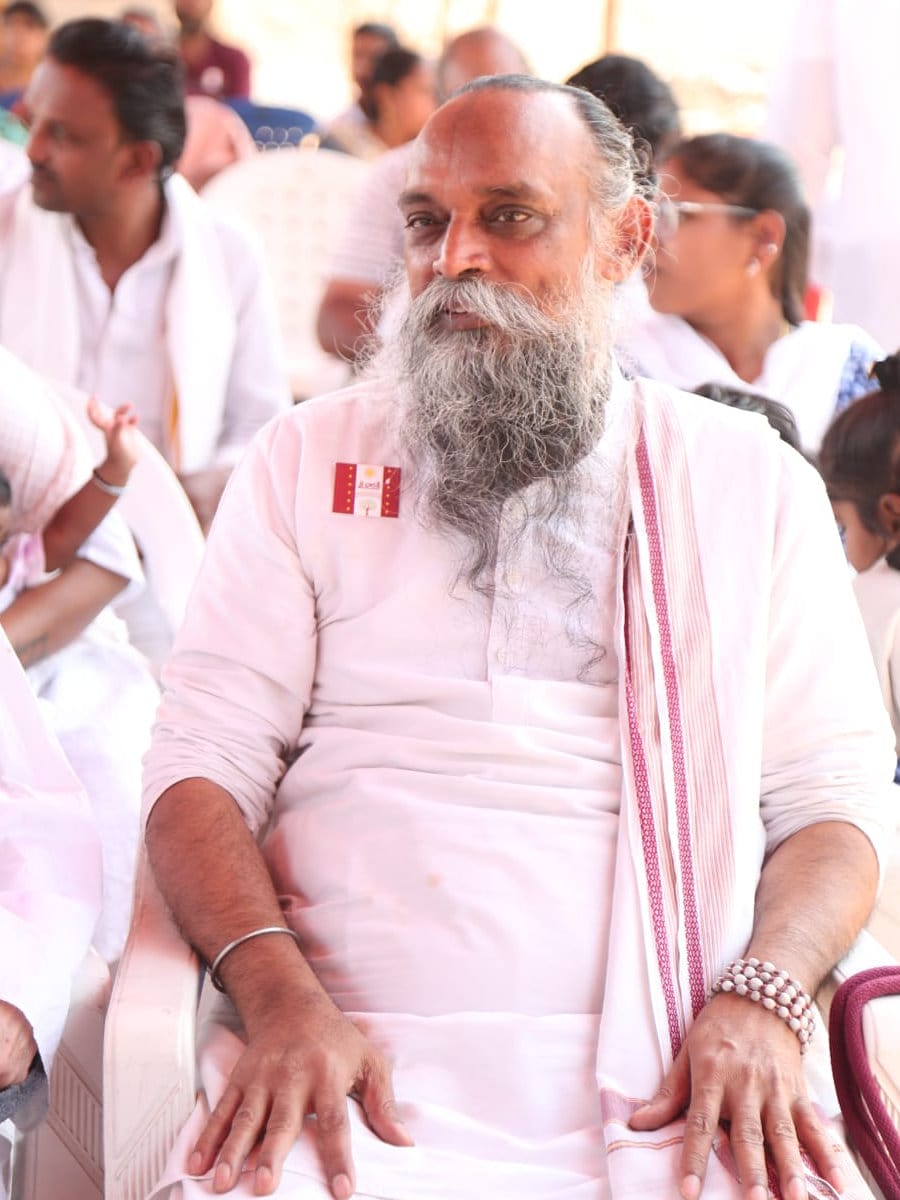
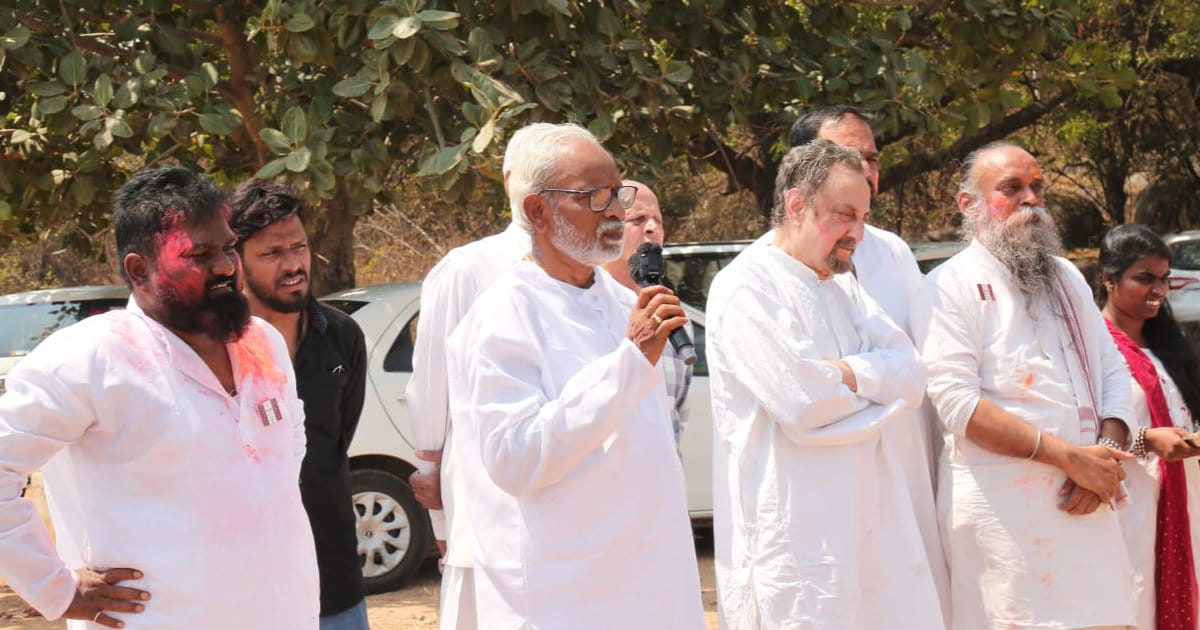
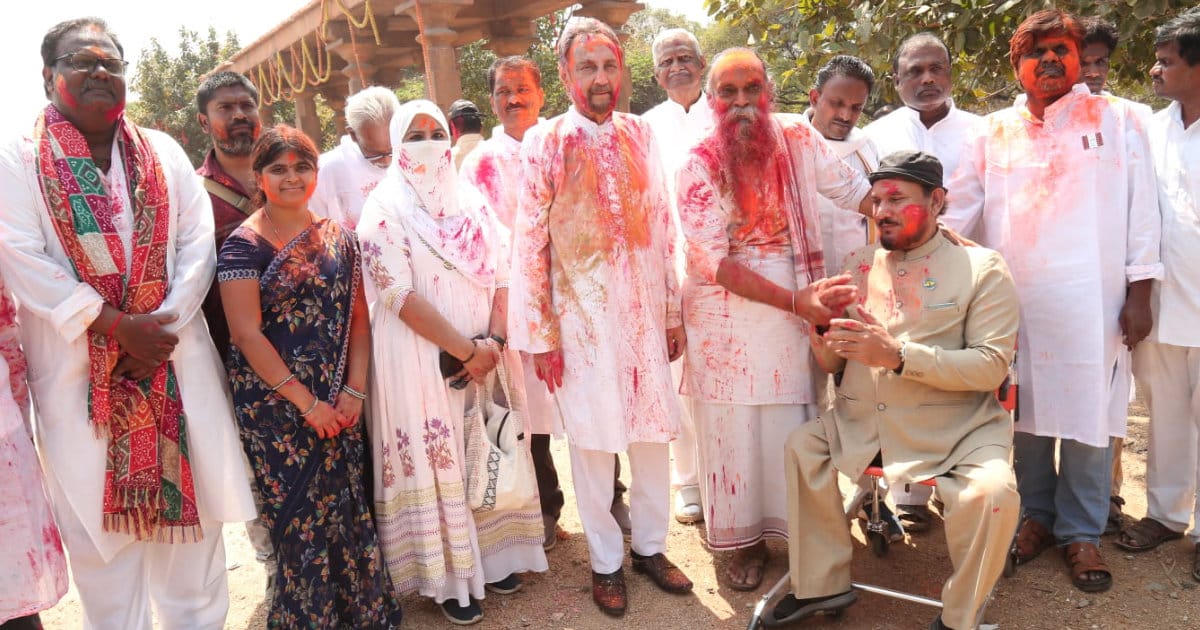
The structure of the Holi celebration at Jubilee Hills reflects a thoughtful balance between the devotional, the performative, and the social. It begins with Holika Dahan – the ritual lighting of the bonfire that gives Holi its deeper significance and marks the evening before the day of colour. In traditional observance, Holika Dahan commemorates the defeat of evil and the protection of devotion, drawing on the story of Prahlada and Holika from Hindu scripture. As a ritual act, it connects the celebration to its spiritual foundations and gives it a seriousness that distinguishes it from purely recreational festivity.
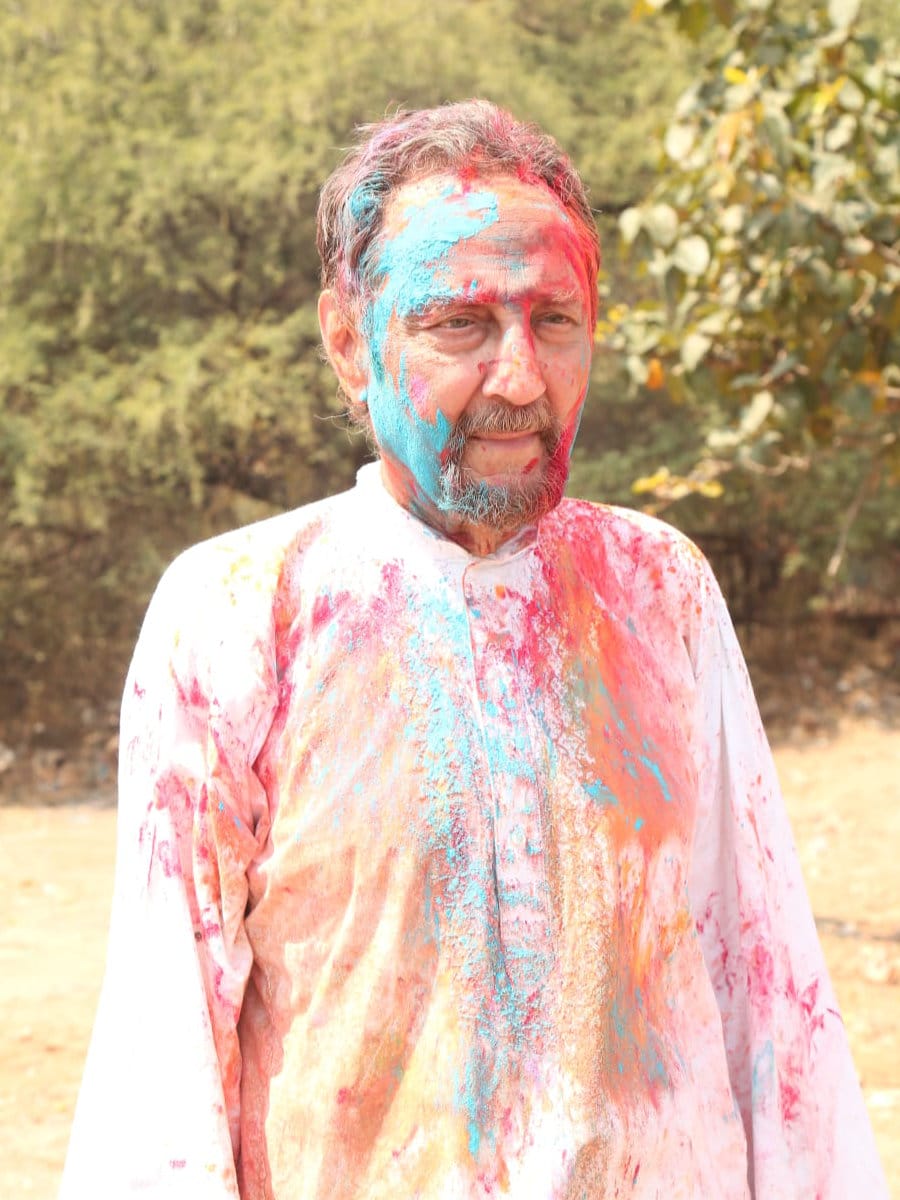
The playing of colours follows – the element of Holi that is most immediately recognisable and most universally participatory. Colours do not discriminate. The invitation to play with them, to smear them on faces and hair and clothes, to be transformed by them into something temporarily identical to everyone else who is similarly marked, is an invitation that carries within it a small but genuine egalitarianism. For a few hours, the visual markers of difference that ordinarily distinguish people from one another give way to a shared palette of red, green, yellow, and blue. It is a temporary condition, but it is not therefore a trivial one.
Folk and cultural performances form another element of the programme – bringing to the celebration the artistic traditions that have grown up around Holi across different regions of India. Music, dance, and storytelling associated with the festival give expression to the range of ways in which different communities have marked this occasion across the subcontinent, and their inclusion at the Jubilee Hills celebration reflects the event’s aspiration to be genuinely representative of the broader cultural inheritance that Holi embodies.
The community lunch that concludes the formal programme is the gathering’s most quietly significant element. It extends the spirit of the morning’s celebration into the register of everyday hospitality – the breaking of bread together as the simplest and most direct form of communal affirmation. Guests from different communities share a meal prepared for all of them, and in that sharing, the abstract language of communal harmony finds its most concrete expression.
JaiHo, the Jai Bharat Platform, and the Expanding Circle
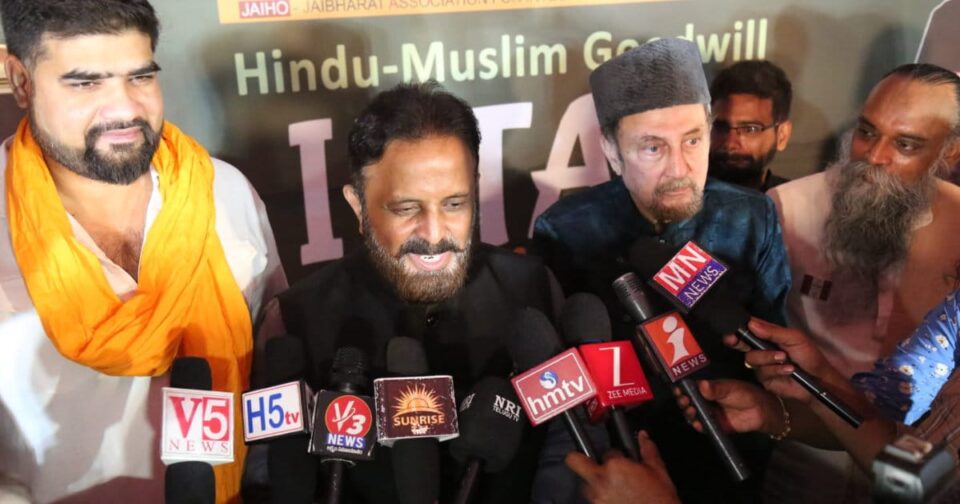
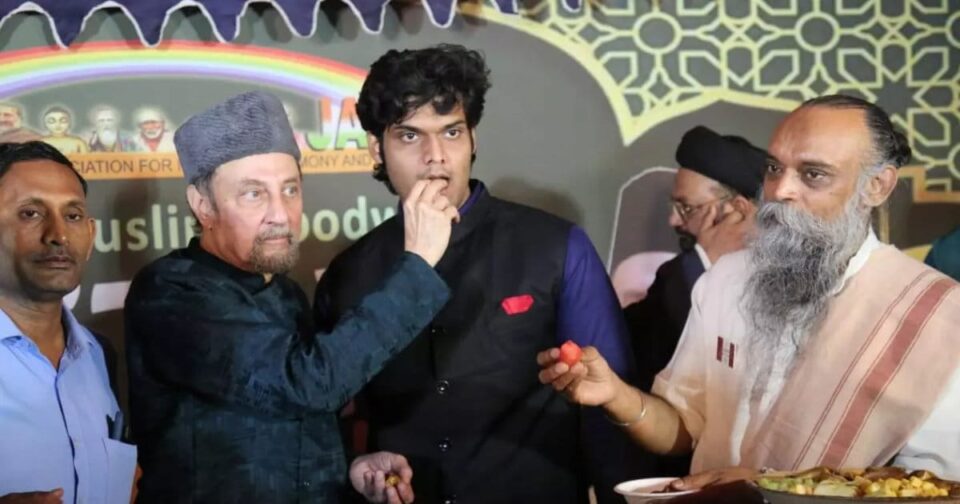
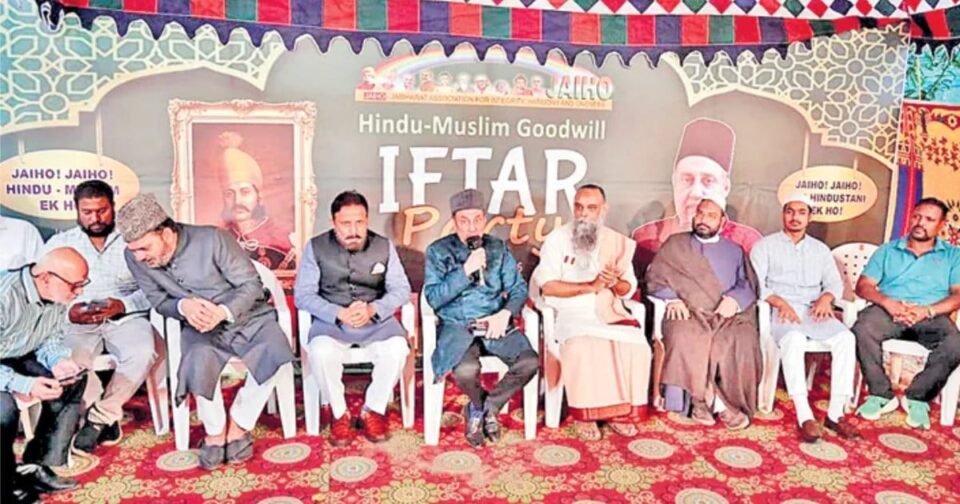
The involvement of JaiHo under the Jai Bharat platform in this year’s celebration represents a broadening of the organisational support behind an event that has long been a personal initiative of Nawab Raunaq Yar Khan. V. Ramanamurthy’s role in coordinating the religious aspects of the programme brings to the occasion the experience and networks of an organisation that has, through initiatives such as the JAIHO Hindu-Muslim Goodwill Iftar, demonstrated a sustained commitment to exactly the kind of interfaith engagement that the Holi celebration at Jubilee Hills represents.
The partnership reflects a recognition that the values expressed in this annual celebration – openness, community, the shared observance of traditions across religious lines – are not the exclusive concern of any single individual or institution. They are values that civil society across Hyderabad holds and seeks to sustain. When organisations with different origins and constituencies come together around a shared occasion, the circle of commitment widens. The Holi celebration at H.I.G.H becomes not only a personal tradition of Nawab Raunaq Yar Khan’s household but a point of convergence for multiple streams of civic effort directed toward the same end.
The emphasis on an alcohol-free celebration and alternative forms of recreation is a feature of the event that deserves specific acknowledgment. It reflects an awareness that genuinely inclusive celebration requires a framework that is accessible to guests of all backgrounds and convictions – that the festival of colour is enriched, not diminished, when its hospitality extends to those for whom alcohol is either a religious restriction or a personal choice. In making this choice consistently, the celebration at Jubilee Hills models a form of inclusivity that goes beyond the merely symbolic.
A Tradition That Looks Forward
The Holi celebration at Jubilee Hills is, among other things, an act of confidence in the future. A tradition maintained for more than fifty years and consciously extended to expatriates and younger participants is a tradition that its custodian believes will outlast his own particular moment of responsibility. It is an investment in transmission – a bet that the values expressed in the gathering will find new carriers in the generations who encounter them here, perhaps for the first time.
Nawab Raunaq Yar Khan’s custodial role, as defined by his designation by the Majlis-E-Sahebzadagan Society, encompasses heritage preservation, cultural representation, and the welfare coordination of the Asaf Jahi legacy’s continuation across generations. The Holi celebration at H.I.G.H is not a formal exercise of that role in any institutional sense. It is something more personal and more direct – a household tradition continued in the spirit of a lineage, an example kept alive through the simple means of repeating it, year after year, with the doors open to all who wish to enter.
In a city that has inherited so much worth preserving, and in an era that tests so many inherited commitments, that continuity matters. The festival of colours, celebrated at a private estate in Jubilee Hills in the tradition of a dynasty that once governed a state defined by its plurality, is a small but genuine contribution to the large and ongoing project of keeping Hyderabad’s best traditions alive.