
In a republic that prides itself on rupture from monarchy, royal legacies often survive in an unresolved afterlife: preserved as architecture, commodified as tourism, and debated in courtrooms. Hyderabad offers the most vivid illustration of this contradiction. Its palaces are photographed endlessly, its Nizams invoked nostalgically, yet the question of who speaks for this inheritance remains unresolved.
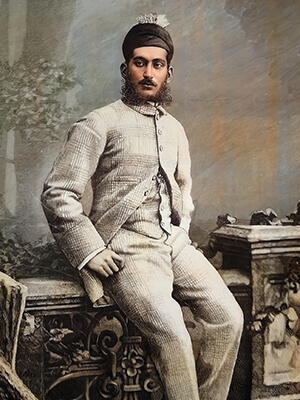
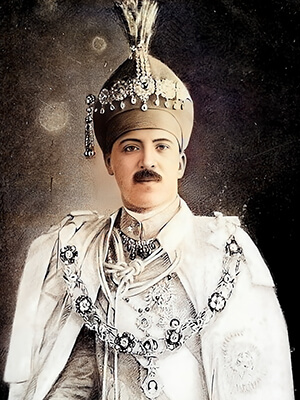
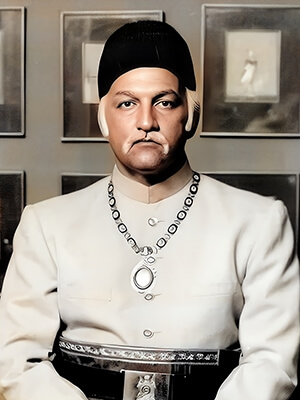
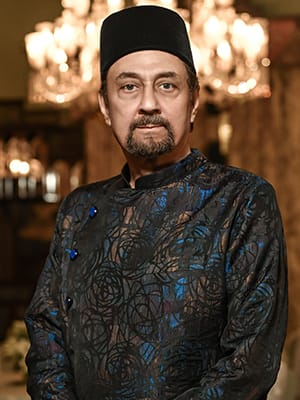
Prince Alexander Azam Jah’s recently filed civil suit, seeking clarity and inclusion in decision-making over Nizam-era properties from Chowmahalla to Falaknuma, reframes the debate from sentiment to structure. A direct descendant of the Asaf Jah dynasty that ruled Hyderabad for over two centuries, and the son of Prince Mukarram Jah — formally recognised in 1967 as the Eighth Nizam — Azam Jah represents a lineage that has outlived sovereignty but not relevance. His entry into this conversation, he insists, is not as a relic of a bygone order but as a contemporary claimant to historical continuity.
In an exclusive interaction with TNIE, the prince argues that heritage cannot be responsibly preserved if its custodians are selected without consensus among rightful heirs. “It is less about reclaiming power than about interrogating stewardship,” he says. “Who decides how history is curated, commercialised, or conserved once kings no longer rule?”
On one front, the Hyderabad City Civil Court and the Telangana High Court have become the primary arenas for disputes over the ancestral palaces of the Seventh Nizam, Mir Osman Ali Khan, and the estate of the Eighth Nizam. Three parallel strands now define the legal contest: rival heir claims, commercial custodianship of palace properties, and challenges by heirs alleging exclusion from decision-making.
In a significant order in October 2025, the court dismissed an interlocutory application by Prince Azmet Jah and his sister Shehkhar Jah, allowing a partition suit filed by Nawab Najaf Ali Khan — another claimant — to proceed to full trial.
The suit concerns properties valued at over `10,000 crore and argues that the palaces should be treated as collectively owned by all legitimate heirs rather than controlled by any individual or subset of heirs. It involves 232 defendants, including the Indian Hotels Company Limited, which operates the Taj Falaknuma Palace. The case raises core legal questions surrounding possession, valuation, and inheritance under Islamic Shariah law and Indian civil jurisprudence.
Legal observers have described the court’s decision to allow the suit to proceed as a pivotal moment, signalling judicial willingness to examine long-standing arrangements governing stewardship and control.
Prince Azam Jah’s own filings seek accountability and clarity around historical arrangements that he argues were concluded without inclusive consultation of all heirs. He contends that under Muslim Personal Law, he and his three half-siblings are the sole legal heirs of the Eighth Nizam, and that he is entitled to a one-third share in all ancestral properties, incomes and sale proceeds. He has also sought interim relief restraining any further sale, transfer or creation of third-party rights over the palaces, artefacts and trust-related funds until his claimed share is secured.
In dismissing his interlocutory application, the court emphasised that such objections must be tested during a detailed trial rather than rejected at a preliminary stage, a procedural stance that ensures comprehensive examination of evidence, but also extends the timeline of legal uncertainty.
From the government’s standpoint, officials maintain that the administration cannot arbitrate familial inheritance disputes and must operate strictly within statutory authority. Competing claims, they argue, must be resolved through civil litigation rather than administrative discretion. Administrative bodies say their role has been limited to ensuring statutory compliance in heritage management, environmental protection and land-use regulation.
“What distinguishes the contemporary dispute from older inheritance battles is its public-philosophical dimension,” Prince Azam Jah contends. He says he is not merely contesting legal technicalities but attempting to reframe heritage as an ethical domain where memory, governance and law intersect.
“Selective participation creates selective histories,” he remarks. “If the voices of any one of the heirs are excluded, the narratives that survive will reflect only those with access to power or capital.”
Across India, from Rajasthan to Mysore, erstwhile princely estates continue to navigate tensions between public use, private lineage and legal entanglement. Hyderabad stands apart for the sheer scale of its heritage and the intensity of overlapping claims.
Courts have adopted a procedural posture, deferring substantive determinations to full trials. The government asserts authority rooted in statute, not history. Claimants, meanwhile, press for a broader reckoning with heritage as a living, ethical domain.
“Beneath the legal complexity lies a deeply personal narrative,” Prince Azam Jah says, speaking of his father, Prince Mukarram Jah. “My father lived through displacement in a way people don’t fully understand. He carried the burden of a history without closure.”
His voice falters as he recalls the silence surrounding unresolved questions of recognition. “I think about what he endured,” he says. “And I know I can’t step away. Walking away would feel like betrayal; not just of lineage, but of truth.”
That sense of obligation, he says, has reshaped his identity. What began as confusion hardened into resolve. “I will fight,” he says plainly. “Not out of anger, but because this feels like justice waiting to happen.”
Several Nizam-era palaces transitioned into museums or luxury hotels, while estates entered revenue records and development plans. These shifts were often framed as pragmatic solutions for preservation and public access. Yet, according to Prince Azam Jah, many such decisions were undertaken without the participation or informed consent of all legal heirs.
“Heritage never disappears,” he says. “It changes hands. Somewhere along the way, participation disappears. I was excluded and kept in the dark for decades.”
A retired lawyer, speaking on condition of anonymity, believes the impasse exposes a deeper structural gap. “The courts are being asked to do what policy never did,” he says. “India abolished monarchy, but never fully articulated how to govern its remnants. The result is an unstable equilibrium: the state controls, corporations monetise, institutions curate, courts arbitrate, and heirs contest.”
He adds that an emerging intellectual consensus – reflected implicitly in Azam Jah’s position – points toward shared stewardship. Such a framework, he opines, would neither romanticise royalty nor erase lineage. “It would acknowledge heritage as a shared moral inheritance: public in access, plural in governance, and accountable in process.”
Prince Azam Jah says he is aware the path ahead is long. “Litigation may be slow, but the resistance is real,” he says. “The Nizam’s blood runs in my veins, a reminder that history is biological before it is legal. This legal tangle has given me a purpose I didn’t know I was missing, and I won’t abandon it.”
Hyderabad’s royal past, it seems, is not done questioning the present. The debate is no longer about who owns the past, but who is permitted to carry it forward.