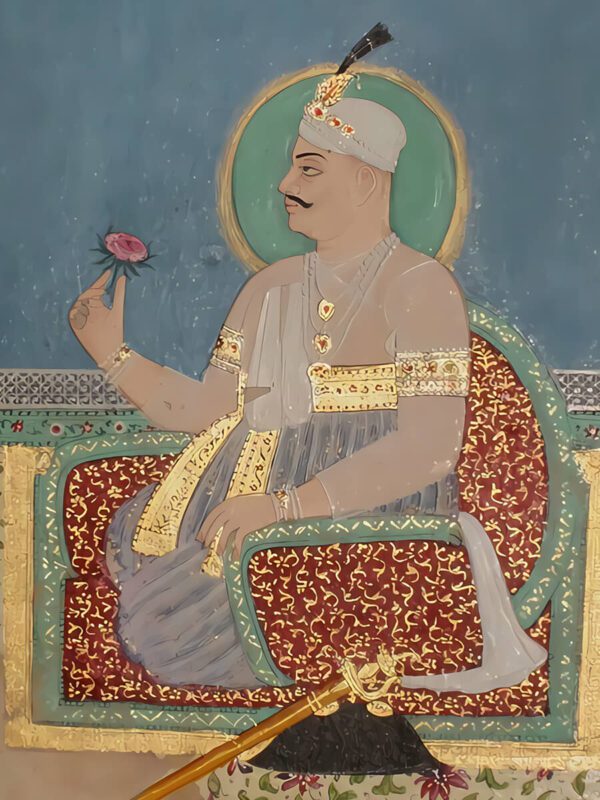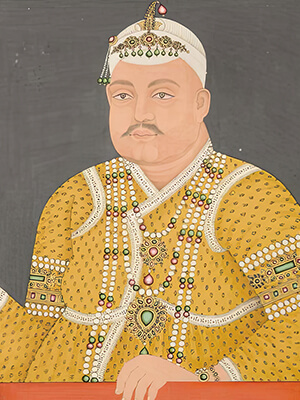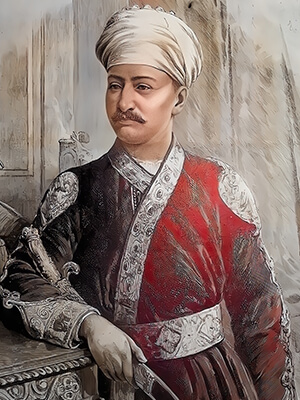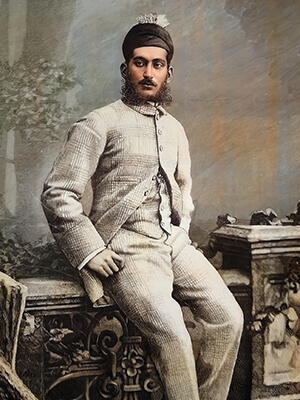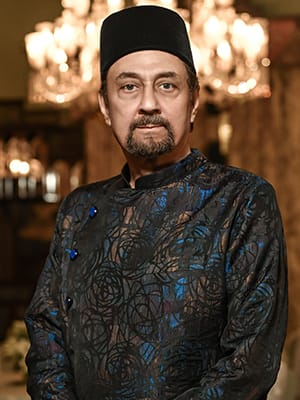
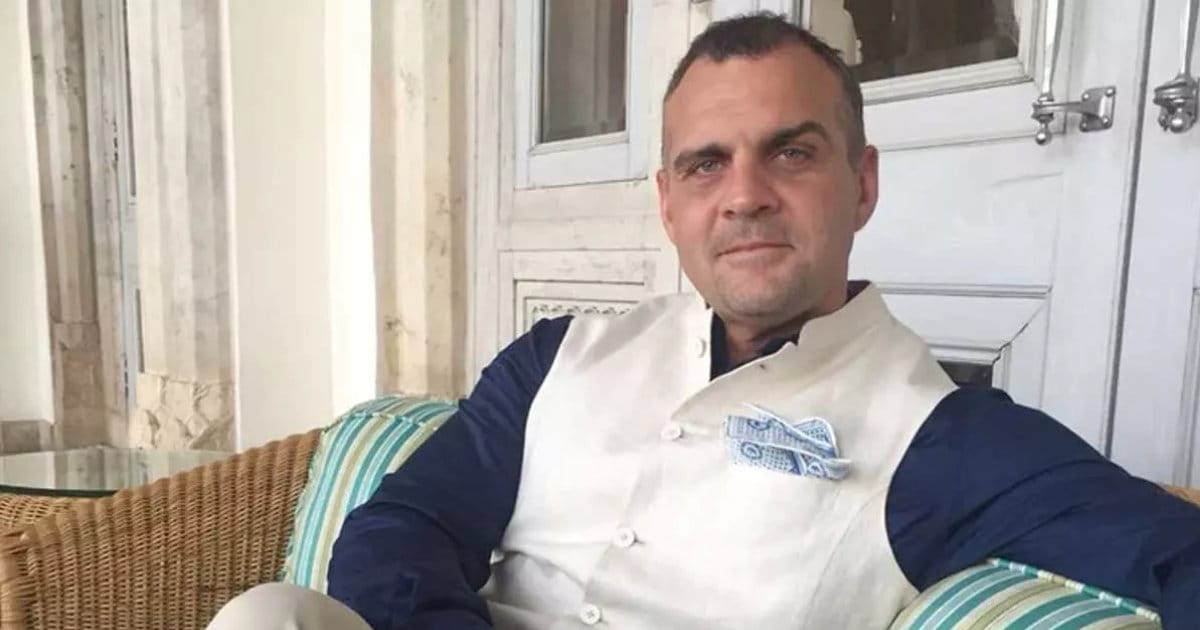
Azam Jah, son of Mukarram Jah and heir to the Asif Jahi dynasty, speaks about his childhood in Hyderabad’s palaces, Mir Osman Ali Khan’s legacy, the Jacob Diamond, missing assets, family history and preserving Nizam heritage.
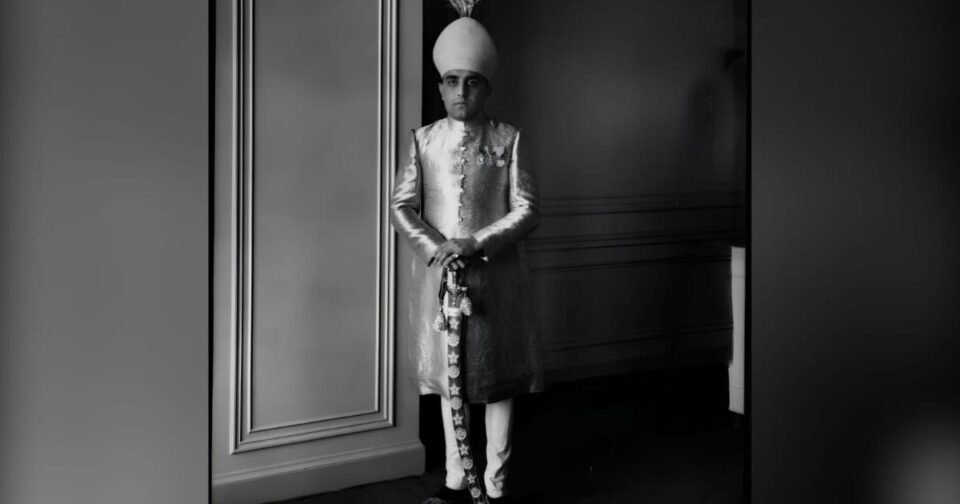
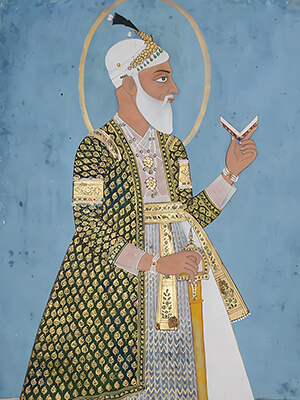
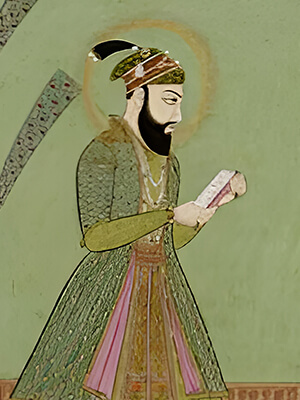
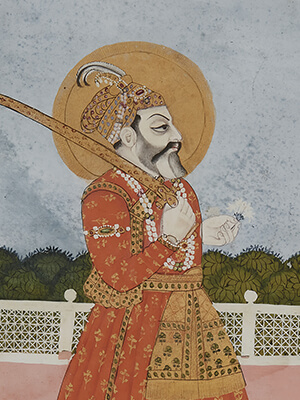
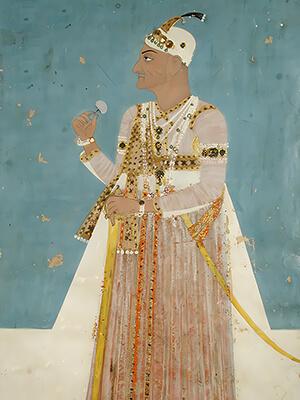
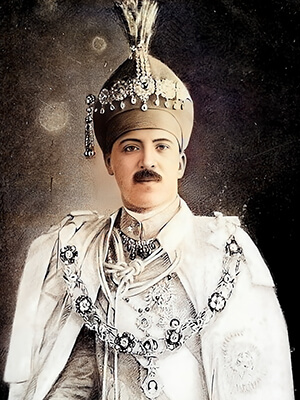
There are few family names in Indian history that evoke as much fascination as the Nizams of Hyderabad. For decades, the Asif Jahi dynasty represented unimaginable wealth, grandeur and influence. The last ruling Nizam, H.E.H. Mir Osman Ali Khan, was famously described by international publications in the 1930s as one of the richest men in the world. His treasures included the legendary Jacob Diamond, one of the largest diamonds ever discovered, a remarkable collection of jewels, palaces such as Falaknuma, Chowmahalla and Purani Haveli, vast landholdings, luxury cars, and a treasury that became the stuff of global folklore.
Yet beyond the diamonds, palaces and stories of wealth lies a dynasty that also shaped modern Hyderabad. Institutions such as Osmania University, Osmania General Hospital, railway networks, reservoirs, roads and cultural landmarks remain among the most enduring contributions of the Nizams.
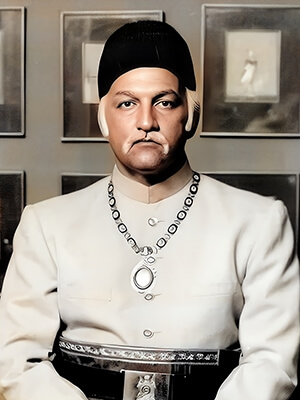
Today, nearly eight decades after Hyderabad’s accession to India, a different chapter is unfolding. At the centre of it is Azam Jah, the second son of the late H.E.H. AsifMir Barkat Ali Khan Mukarram Jah Bahadur, widely recognised as the eighth Nizam of Hyderabad. Engaged in an ongoing legal battle over his late father’s estate, Azam insists that his fight is not about riches, but about fairness, transparency and preserving a legacy he believes is being lost.
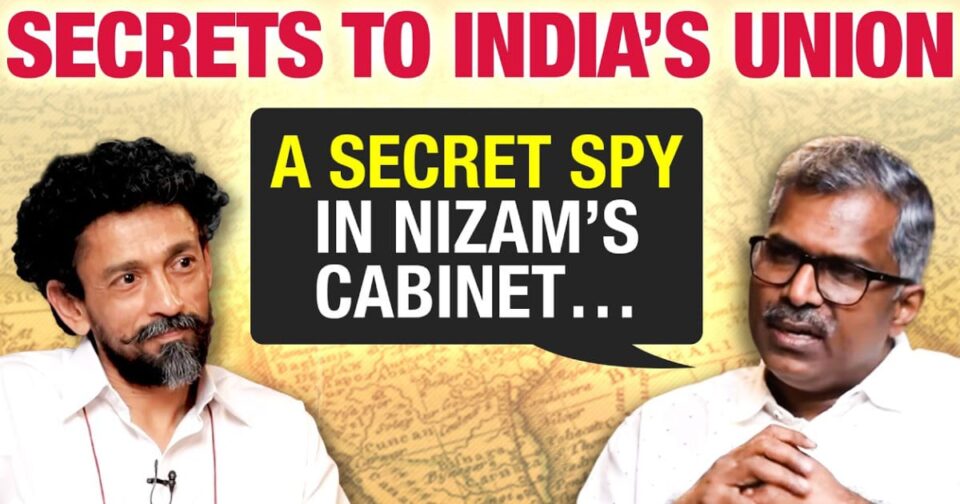
Speaking candidly to ET Now’s Eshita Bhargava, he reflects on growing up amid history, his relationship with his father, the fading memory of Hyderabad’s royal past and why he believes the greatest challenge facing the Asif Jahi legacy today comes from within.
“I’ve never felt trapped by my family’s legacy. If anything, I’ve always felt privileged to be part of it. It’s something I’m proud of. I’ve never looked at my family name as something that held me back—it’s simply a part of who I am, and I feel fortunate to carry it.”
For a man born into one of India’s most famous royal families, Azam Jah’s reflections are strikingly personal rather than aristocratic.
“The biggest misconception is that people see the Nizam family as one family with one fortune, where every member enjoys the same wealth, influence and access to the family’s assets. That simply isn’t the reality. Each member’s circumstances are different.”
His own circumstances, he says, are far removed from the assumptions many make.
“Despite being one of my late father’s legal heirs, I have consistently maintained that I have received no share of my inheritance or anything of my father’s—not even minor personal items from father to son to remember him by. I have been excluded from decisions concerning the estate, trusts and other family assets, which has hurt me deeply because I have such a love for Hyderabad and am so very proud of my history. That is why I have approached the courts.”
The legal dispute, he insists, is not about privilege.
“For me, this has never been about titles. It’s about ensuring that my legal rights as an heir are recognised and that the estate is managed fairly and in accordance with the law.”
It is a sentiment rooted in his understanding of what the Nizams stood for. While history remembers Mir Osman Ali Khan for his wealth and treasures, Azam Jah believes his great-grandfather’s true legacy lies elsewhere.
“People often associate the Nizam family with wealth, jewels and palaces, but that is only one part of our history. The Nizams made significant contributions through institutions such as Osmania University and Osmania General Hospital, while also investing in public infrastructure and supporting the arts, architecture and culture. Many of these institutions continue to serve people even today, and I believe that is the true measure of a lasting legacy.”
Whenever he visits Hyderabad, he says, he is reminded of that connection.
“I meet people who still remember and appreciate those contributions. Those conversations remind me that our family’s legacy is not defined by its wealth alone, but by what it contributed to the city and its people.”
Azam Jah never met Mir Osman Ali Khan, who died in 1967, years before he was born. Yet stories passed down by his father shaped his understanding of the seventh Nizam.
“I don’t think it would be right for me to speculate about what might have disappointed him. I can only judge him by the stories my father shared with me and by the legacy he left behind. From everything I have heard, he believed in building institutions that would serve people long after his lifetime.”
Azam Jah speaks frequently of his father, Mukarram Jah, whose own life was marked by immense wealth, international residences and complicated family dynamics. To the public he was the eighth Nizam. To Azam, he was simply Dad.
“For a start, my father hated cameras and the limelight. Many people saw him as the VIII Nizam, but for me he was always just Dad. What people don’t often know is that he had a very dry and cheeky side to him. He would pull pranks on me every now and then and found great amusement in it.”
The affection is evident in every recollection.
“We were very, very similar people. Our mannerisms, values and sense of humour were remarkably alike. I miss him more than I have words for.”
Ask him what hurts most—the legal disputes, exclusion from family assets or the public battle—and his answer arrives without hesitation.
“Neither. Nothing compares to the loss of my father. The bond I shared with him and the memories we created together are far more valuable than any material asset. Not a day goes by that I don’t miss the man immensely.”
Some of those memories belong to a Hyderabad that feels almost mythical today.
“Falaknuma and Chowmahalla are beautiful palaces and gifts to the city, but I spent most of my time at Chiraan Palace with my father. I had my room upstairs close to his, staff all around, and I simply accepted it as normal because I knew nothing else. It wasn’t until my early teens that I realised just how extraordinary this life was.”
His recollections are unexpectedly vivid and charming.
“Playing in Purani Haveli as a child is something I look back on very fondly. My father adored Chowmahalla Palace and we’d be there constantly when I was young.”
Then comes a memory that feels almost cinematic.
“To this day I have a great love for horses. My first was a little one my father bought for me. I would ride through Chiraan’s old grounds while my bodyguard, Hussain, kept an eye on me. I remember seeing kites in the sky that local children would fly. Those are the purest memories I have, untouched by the legal battles and complications that came later.”
He says many of the disputes now before the courts stem from what he views as a lack of transparency surrounding the management of his father’s estate and trusts.
“When people ask me where the Nizam’s wealth went, I tell them there isn’t a simple answer. Over the years, the estate became fragmented through family arrangements, trusts, long-term leases and various transactions. What was once a consolidated estate no longer exists in that form.”
He argues that clarity remains elusive.
“There still isn’t complete transparency about the estate as a whole. My purpose is not to chase headlines about the Nizam’s wealth. It is to establish the facts, secure my lawful share and ensure that an important part of Hyderabad’s heritage is managed with transparency and accountability.”
For him, the legal fight is inseparable from the preservation of history itself.
“This has never been solely about inheritance or financial considerations. It is about ensuring that matters relating to my late father’s legacy are handled openly and lawfully. My actions today are guided not by personal gain, but by a desire to ensure fairness, accountability and the proper stewardship of a legacy that carries significance not only for my family, but for the broader history of India itself.”
The conversation inevitably turns to Hyderabad and how much it has changed since the days his father often described.
“My father spoke about Hyderabad of the 1950s and 1960s as an extraordinarily beautiful city defined by vast green spaces, rock formations, grand heritage structures and a unique sense of character. But this is 2026, not 1956. Change is inevitable and progress is necessary. The real challenge is ensuring that development and preservation coexist.”
As for what being an Asif Jahi means today, the answer is surprisingly grounded.
“It is not just a title, and it is not a burden either. It is simply part of my family history, but one that carries meaning because of what it represents for Hyderabad. If there is any contribution I can make to the name, it would be to carry it as my fathers before me did.”
His father’s most valuable lesson had nothing to do with royalty, jewels or wealth.
“Talk less, listen more.”
He pauses before expanding.
“He taught me a great deal simply by watching how he interacted with people. One of the most important lessons was about trust—both its beauty and its dangers. He was one of the most trusting people I have ever known, and yet that trust was exploited repeatedly throughout his life.”
It is a lesson he says has stayed with him throughout the current legal battle.
For now, that battle continues. But when asked how he hopes history will remember him, Azam Jah offers an answer that sounds remarkably similar to the stories he tells about the generations before him.
“If my name is mentioned, I would like it to be as someone who stood his ground even when the odds were against him and fought. As his forefathers did—the Nizams of old.”