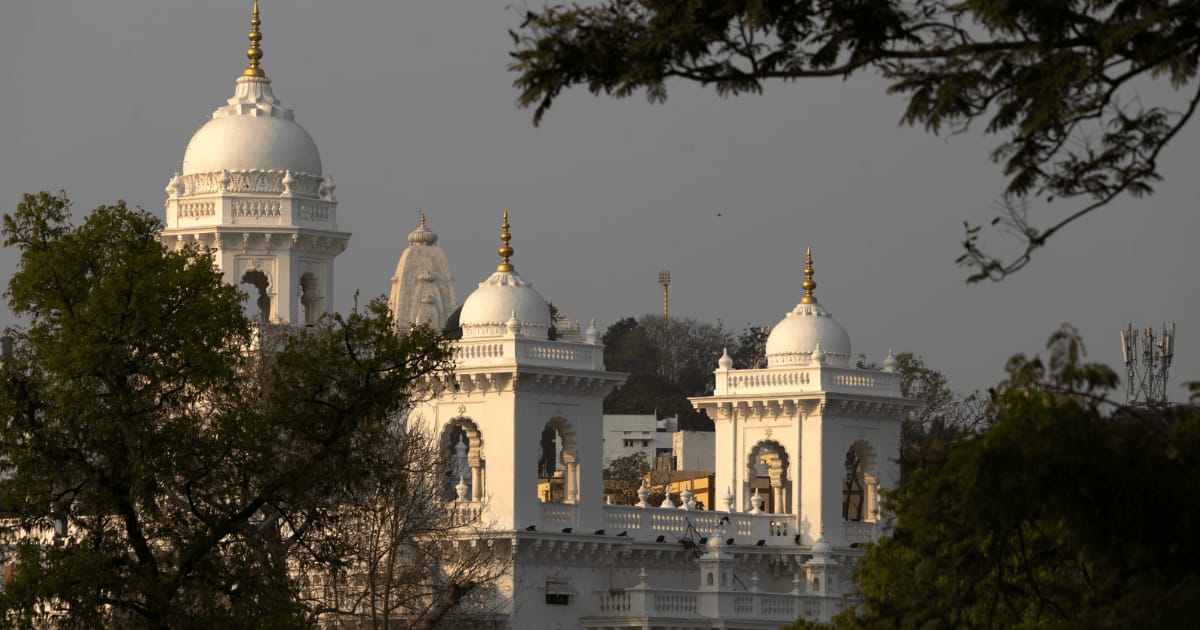
For generations of Hyderabadis, the Legislative Council building in Nampally was simply known as ‘Assembly’: the power center of Deccan politics. Yet, few can remain impervious to its startling beauty, striking even in the fleeting glimpses caught while navigating the city’s traffic. Or from the elevated vantage of the Metro, which offers stray peeks of its glorious façade and grand canopies.
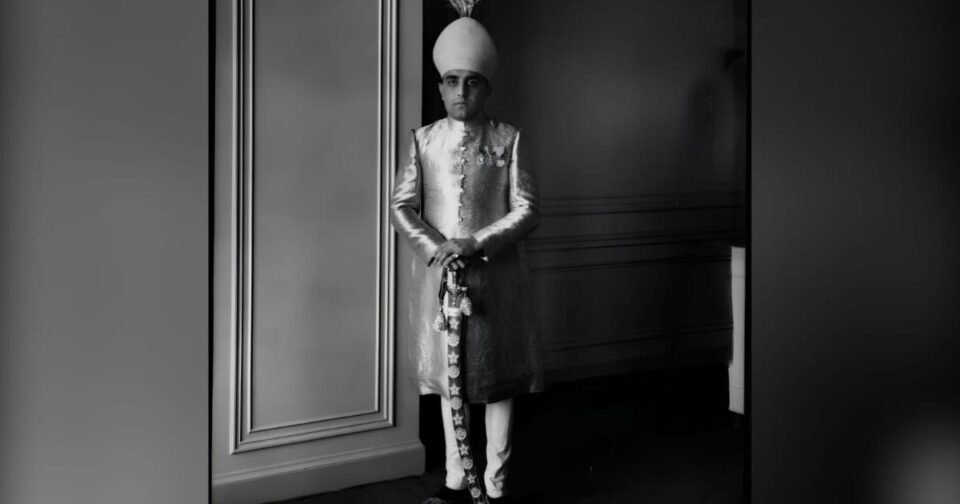
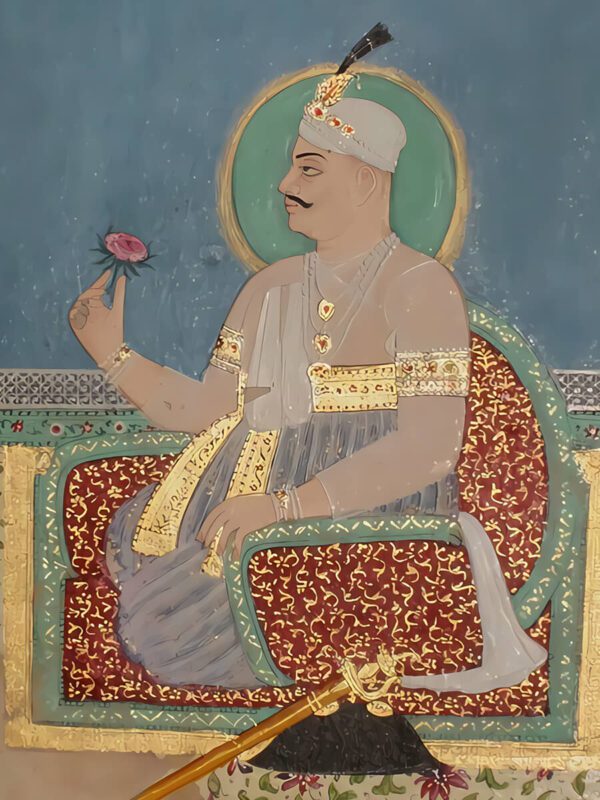
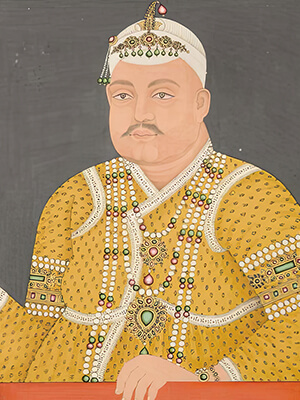
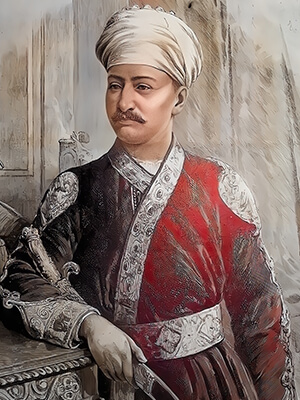
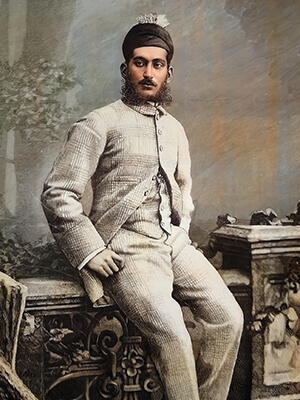
Built under the aegis of the sixth Nizam of Hyderabad, Mahboob Ali Khan, who laid the foundation of the structure in 1905 that was completed in 1913, the building is a notable example of Indo-Saracenic architecture decked with Rajasthani elements. The 60,000-square-foot heritage structure resembles the city’s layered past in more ways than one. It bears witness to the then prevalent poetic dialogue between East and West through its design, where the indigenous cusped arches and fluted columns of the Deccan met the stately Corinthian capitals and Victorian Minton tiles of the British Empire.
“The building was known as the Mahbubia Town Hall and funded largely by public subscription,” shares historian Sajjad Shahid, “Architecturally, it is important as it marks a transition from the ornate Mughal style preferred by the city’s nobility to a less austere, practical style that defined the era of the seventh Nizam of Hyderabad, Osman Ali Khan.” For nearly a century, its white silhouette against the Hyderabad sky was a symbol of governance.
In 2008, the incompatible later additions, excessive water ingress, and lack of maintenance had made it vulnerable and unfit for use. However, restoration by the Aga Khan Trust for Culture (AKTC), which started in late 2024 and finished in 2026, has resurrected the landmark to its former glory. “A craft-based approach was adopted with a focus on utilizing traditional materials and techniques and engaging master craftspeople,” notes Ratish Nanda of AKTC, and adds, “Conservation has given the building a new lease of life.”
Roadmap For Revival
The existing structure faced a gamut of issues: missing or damaged elements such as the urns on the parapet, scraping of 20th century cement plaster repairs, and restoration of stucco plaster and the façade among other issues. Therefore, extensive conservation efforts, underpinned by rigorous investigation and research, were undertaken to restore damaged or lost architectural elements, securing the building’s structural stability and facilitating its reuse.
The primary antagonist of the story was cement, which had trapped moisture and caused the lime concrete to disintegrate. “Conservation works employed traditional materials such as lime mortar prepared with hand tools by master craftsmen using time honored building techniques,” explains Nanda. “The focus of conservation was the assembly hall itself, but it extended to every square inch of the building.”
The most harrowing challenge lay above. “The structural engineer upon his first assessment of the roof’s instability, fled the building in concern,” Nanda recalls with a smile. The team had to install a temporary shed over the entire roof to prevent further ingress while they painstakingly dismantled five stubborn inches of thick cement. Beneath, they discovered the original jack-arch roof, which was repaired using lime mortar and handmade terracotta tiles.
Inside the main hall, the process was equally intensive. Workers spent months hand-scraping layers of 20th century enamel paint from ornate stucco, revealing the delicate floral garlands and Corinthian details that had been suffocated and invisible for decades. The removal of hazardous asbestos false ceilings (a known carcinogen) finally allowed the historic jack arches to breathe, while a new, bespoke ceiling was designed to integrate seamlessly with the Nizam-era motifs.
Return Of Light And Detail
The exterior of the Assembly is its most prominent feature and a masterclass in decorative masonry, but years of neglect had seen its signature flowerpots and finials crumble. For restoration, a small army of artisans (lime craftspeople, potters, and coppersmiths) was engaged who clocked over 50,000 workdays.
The ornamented parapet, which had dislocated due to severe water seepage, was meticulously dismantled and reinstated to match archival detail. The alchemy was also repeated in restoring the central chhatri. More than 50 pieces of the century-old copper finials, skewed and damaged by time, were repaired by skilled coppersmiths using hand tools before being reinstated. Meanwhile, over 500 ornamental brackets were recreated to support the reconstructed eaves (chajjas), ensuring the building’s outline was once again sharp and rhythmic.
Another revelation is the transformation of the corridors. Dark, dingy passages were cleared of brick infill walls, and the vintage Victorian tile flooring was restored, with handcrafted replacements commissioned where the authentic Minton tiles were missing. Furthermore, the revival of the interior corridors involved uncovering the arcade’s ornamental columns, many of which had been buried or damaged by previous partitions. Master artisans rebuilt these missing structural members to match the archival details, enabling that the dance of light and shadow, central to the building’s foundational 1913 design, was finally returned to the space.
A Blueprint For Adaptive Use
Beyond the obvious aesthetic triumph, the project serves as a crucial case study for urban heritage buildings. It proves that conservation is the more sustainable, natural, fiscal, and ethical choice, hopefully paving the way for thoughtful preservation of Hyderabad’s built culture, much of which is under increasing threat every passing day. “A key lesson from this project is that all buildings can be repaired,” says Nanda. “Conservation and reuse cost a fraction of the expenditure needed to building afresh.”
With one of the most hallowed architectural gems of the city getting a fresh lease of life as the nerve center of a functional and vibrant democracy, the conservation efforts serve as a reminder that history doesn’t need to be demolished to make way for its future; it can be readapted and readied for a new role. All it needs is vision, patience, and mostly, a will to preserve.