The recent car blast near Delhi’s historic Red Fort was not an isolated incident; it reflects how radicalisation has quietly embedded itself in India’s urban spaces. Patterns emerging from recent cases point to micro-modules without hierarchy, individuals radicalised entirely online, and educated youth — doctors, engineers and tech students — drawn into ideological distortion. These are distinctly urban pathways, shaped by anonymity, emotional vulnerability, and digital echo chambers that create a false sense of purpose.
Yet India also stands apart in important ways. I often remind young audiences of a fact rarely acknowledged; India gave no foot soldiers to Al-Qaeda and only a handful of inconsequential recruits to the Islamic State (ISIS). This is not accidental. India is different — socially, culturally and psychologically. In few countries do children sit on the same school bench with classmates from three or four faiths, share food from each other’s tiffin boxes, and grow up with a natural ease around differences. That everyday pluralism has long been India’s invisible protective shield against mass radical drift. Preserving and consciously reinforcing this strength is essential.
The Delhi blast reminds us that while India’s fundamental social resilience remains strong, urban radicalisation has evolved faster than our existing response architecture. Several deductions stand out. The first is the replacement of traditional grooming with digital indoctrination. Ideologues sitting thousands of kilometres away can guide actions through encrypted channels, micro-lessons and emotional manipulation. The second is the erosion of the old assumption that poverty or lack of education drive extremism. Recent modules show the opposite — radicalisation has entered the urban middle class. Third, transnational ideological currents now find resonance in the minds of individuals who may have no direct connection to global conflict zones. Online identity politics has created bridges where none had earlier existed.
India cannot rely solely on security-intelligence responses. Policing, surveillance and disruption of modules remain essential, but they cannot address radicalisation’s psychological roots. The time has come for India to build a comprehensive national counter-narrative framework — intellectually strong, culturally empathetic, community-driven and administratively supported.
Models abroad offer inspiration. Saudi Arabia and the UAE have built structured deradicalisation programmes involving counselling, religious clarification and post-release monitoring. Singapore’s Religious Rehabilitation Group blends theology, psychology and family engagement. But these operate in smaller, more controllable demographic environments. India’s challenge is of a different order — a vast population, multiple sects and schools, diverse socio-political contexts, and a turbulent digital sphere. We cannot copy models; we must adapt their principles.
Fortunately, India has enormous intellectual horsepower to build its own system. Our universities house scholars who study modern extremist narratives. The strategic community — think-tanks, military veterans, intelligence professionals — is larger and more experienced than ever. Psychologists can decode vulnerabilities that recruiters exploit. Clergy with social credibility can correct theological distortions. And well-educated Muslim women, who shape household environments and youth attitudes, are increasingly influential voices who must be part of this architecture.
These actors must be brought together in a national consortium that designs counter-radicalisation curricula, builds community workshops, assists state governments and ensures uniformity in core messaging. The frameworks they craft must be delivered through two routes.
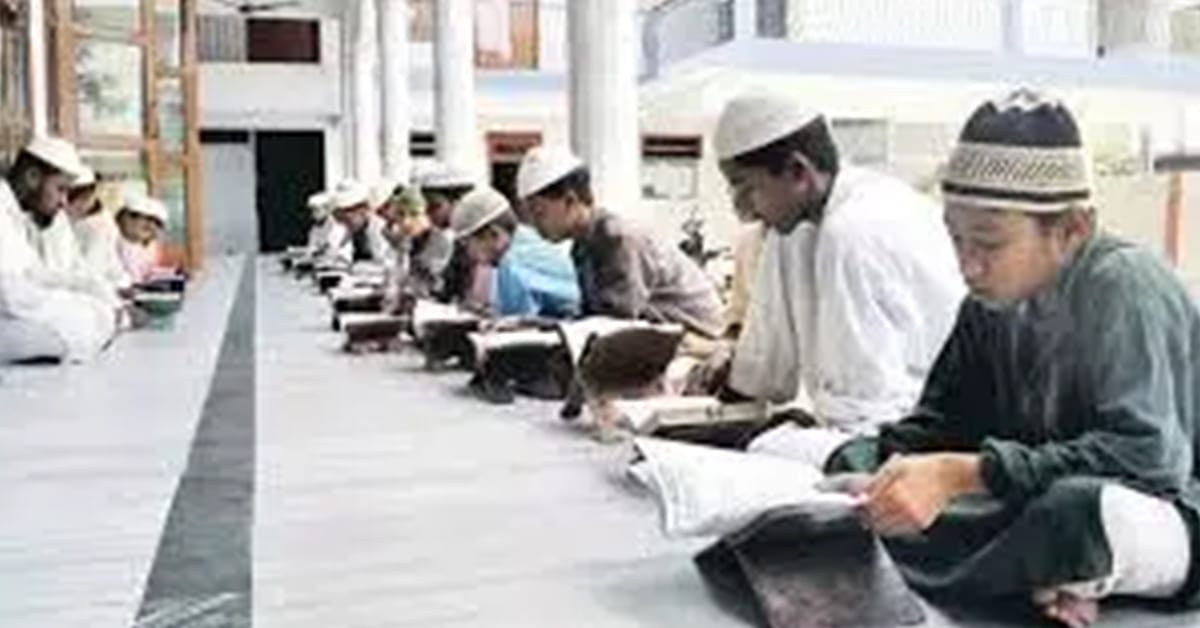
First, physical sensitisation. Institutions with significant Muslim youth — universities, technical centres, coaching institutes, progressive madrasas and Islamic cultural hubs — should host programmes that are not preachy or securitised but trust-building. These workshops must help parents, siblings, teachers, and community elders recognise early-warning signs, understand online threats and notice psychological shifts. This is not a “Gen Z problem”; blaming youth only widens the gap. Parents must evolve their engagement to match the digital world that their children inhabit.
Educational institutions must also accept their responsibility. Many campuses now normalise hate speech, polarised rhetoric, and exclusionary behaviour. Claiming this is “outside academic scope” is outdated. Disharmony begins in campus conversations, peer groups and online student forums. If institutions do not monitor and counter hate-based sentiment, they inadvertently create environments ripe for grievance and alienation. Restoring societal stability requires early interventions at these formative levels. At the same time, no one must be deliberately “Otherised”.
Radicalisation grows where individuals feel pushed to the margins; if young people are treated as the “Other”, some may begin to see themselves that way. India’s strength lies in belonging, shared identities, and the countless ways our lives are interwoven. This principle should guide all counter-radicalisation efforts.
Kashmir, especially, deserves sensitivity. Kashmiris cannot be typecast with suspicion; doing so prevents Kashmiri society from recognising its rightful place within India. Role models from Kashmir — in academia, the armed forces, sports and entrepreneurship — embody integration and aspiration. Highlighting them is vital, for a respected community is far less vulnerable to radical messaging than one that feels perpetually judged.
The second route is the digital-cinematic strategy. India’s creative industries, rich with filmmakers and storytellers, can produce nuanced, empathetic content that counters extremist narratives without demonising communities. Stories of belonging, aspiration and shared identity often succeed where official advisories cannot, and India’s cultural diversity gives it a natural advantage in shaping such narratives.
The Muslim community’s voice against violence must grow clearer, louder and more transparent. Many educated members of the community, in their hearts, reject extremism outright. But public articulation matters. When influential community members vociferously condemn violence in the name of faith, it builds credibility, strengthens internal reform, and reassures the wider society. I wish to register my own unequivocal condemnation here as well. Silence, however well-intentioned, unintentionally creates ambiguity. Transparent condemnation creates trust.
Urban radicalisation is a global challenge. Europe struggles with home-grown modules; Southeast Asia is continually refining its frameworks; Africa confronts the fusion of extremism and ethnic conflict. India has the capacity — and indeed the responsibility — to craft a model rooted in its pluralism, informed by academic insight, strengthened by community partnership, and sustained through administrative resolve.
The Delhi blast is a warning, but it is also an opportunity — to rethink, redesign and rebuild our national counter-radicalisation architecture before small sparks grow into large fires. India’s future prosperity depends not merely on economic growth but on social harmony. Protecting our youth from ideological manipulation, ensuring no community feels “Otherised”, empowering parents and institutions, and building narratives that celebrate India’s pluralistic strengths — these are the foundations of a safer, stronger India.