
The Asaf Jahi institutions are still functioning. The question is who is responsible for them.
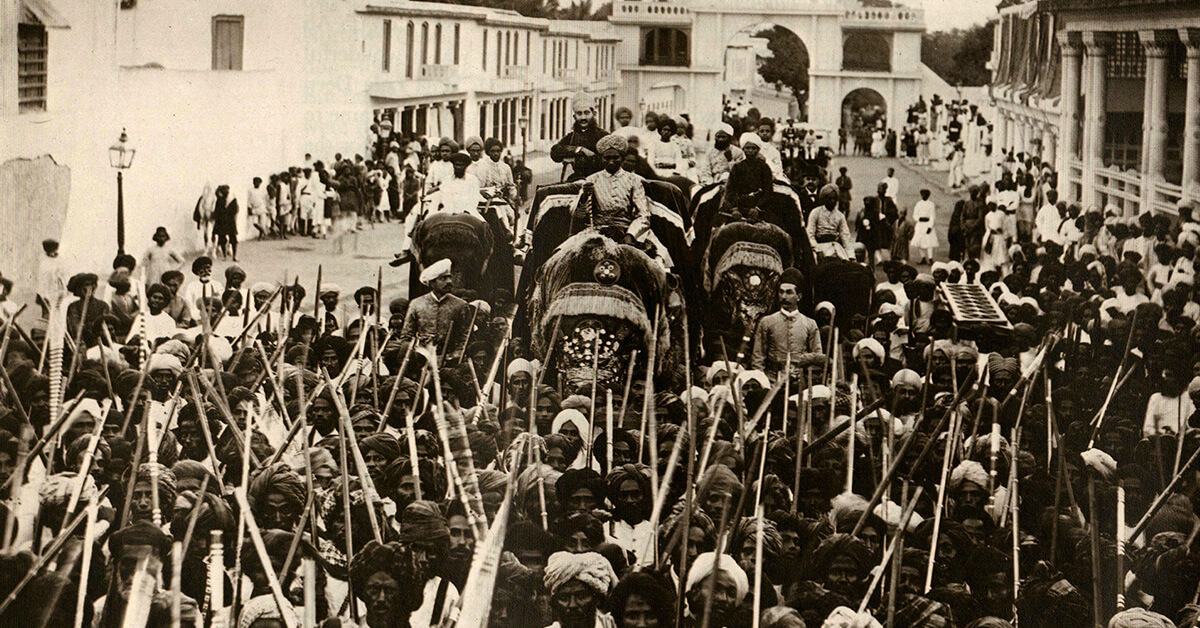
The Nizams of Hyderabad governed the Deccan for more than two centuries. When that governance ended – first with the Indian Army’s Operation Polo in 1948, then definitively with the Twenty-Sixth Constitutional Amendment abolishing privy purses and official recognition in 1971 – what remained was not nothing. It was a vast, complicated, and largely unmanaged inheritance: dozens of trusts, hundreds of endowments, thousands of acres of property, and a family of more than 4,500 people whose welfare had been tied, across generations, to institutions built in the dynasty’s name.
Nobody had a clear plan for what happened next.
That absence of a plan is still being felt. Seventy-five years after the state dissolved, the Asaf Jahi institutional inheritance remains one of Hyderabad’s most complex administrative realities – a landscape of trusts with competing conditions, properties under government occupation, Waqf endowments with contested governance, and a family large enough to constitute a small city, many of whose members live in circumstances their lineage would not suggest.
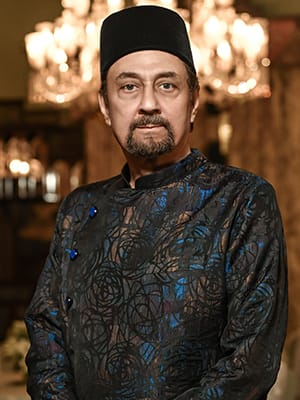
Understanding this landscape – and understanding what it means to engage with it as a custodian rather than as a beneficiary – is essential to understanding what H.H. Nawab Raunaq Yar Khan, Symbolic Custodian and IXth Nizam of the Asaf Jahi Dynasty, actually does.
The Trust Architecture
The Nizams were prolific institution-builders. Across nearly 225 years of governance, they established hospitals, schools, mosques, dargahs, public works, and charitable endowments on a scale that shaped Hyderabad’s physical and social fabric in ways still visible today. Osmania University, the Osmania General Hospital, the Nizam’s Institute of Medical Sciences, the network of Waqf properties managing religious and charitable assets – all carry the institutional imprint of a governing tradition that understood philanthropy as a function of statecraft rather than personal generosity.
The dynasty also built a trust architecture specifically for its own family. The HEH Nizam’s Sahebzadas of Sarf-e-Khas Trust was established to provide allowances for the descendants of Nizams I through VI – the Sahebzadas and Sahebzadis of the royal household. Mir Osman Ali Khan established the Majlis-E-Sahebzadagan in 1932 specifically to represent this constituency’s welfare interests. Additional family trusts were created across different reigns, each with its own conditions, its own beneficiary definitions, and its own governance requirements.
By the time Operation Polo ended the state in 1948, there were more than thirty distinct trusts operating under the Nizam’s name. By 1971, when the constitutional framework changed again, these trusts existed in a legal grey zone: their purposes remained valid under Indian law, but the governing authority that had created and overseen them – the Nizam’s state apparatus – no longer existed. What filled that gap, in practice, was a combination of court oversight, contested family governance, and the slow entropy that affects any institution whose founding authority has disappeared.
What the Courts Said
The legal history of the Nizam’s institutional inheritance is lengthy and specific. Its most relevant moment for present purposes came in 1999, when the Chief Judge of the City Civil Court Hyderabad passed a directive in O.P. 147/1995 that established a clear principle: decisions concerning the Asaf Jahi family’s trusts and institutional affairs must be made with the consensus of legal heirs of Nizams I through VI.
This was not a minor procedural ruling. It established that the family’s broader constituency – not the nearest heir of the most recent Nizam alone – had standing in decisions affecting the shared institutional inheritance. It was affirmed by the Andhra Pradesh High Court in subsequent proceedings. It remains the closest thing to a judicial framework for Asaf Jahi family governance that exists in Indian law.
The Majlis-E-Sahebzadagan Society – as the registered representative body of the Nizams I through VI descendants – is the institutional embodiment of the constituency the court identified. When the Majlis designated H.H. Nawab Raunaq Yar Khan as custodian in 2023, it was exercising precisely the representative function the court’s framework envisaged.
The 2026 Supreme Court ruling in the Kapurthala case – which held that primogeniture does not govern the private properties or succession of former Indian rulers, and that personal law applies – reinforces this framework at the highest judicial level. For a Muslim family like the Asaf Jahi dynasty, personal law means Mohammadan law of succession: distribution across eligible heirs, not concentration in a single designated individual.
The Waqf Dimension
The HEH Nizam’s Waqf institutions represent the most practically significant component of the Asaf Jahi institutional inheritance. These are Islamic charitable endowments – covering mosques, dargahs, educational institutions, and welfare properties – established under Islamic law and governed under Indian Waqf legislation. Their combined scope across Hyderabad is substantial.
The Telangana Waqf Board’s ruling that a claimant holding foreign citizenship was ineligible to chair the HEH Nizam Awqaf Committee illustrates a principle that the Kapurthala ruling has now reinforced from the Supreme Court level: the management of Indian institutions established under Indian law requires Indian legal accountability. A symbolic claim to custodianship made from abroad does not satisfy the governance requirements of institutions that serve Indian citizens on Indian soil.
H.H. Nawab Raunaq Yar Khan’s entire adult life has been spent in Hyderabad. He holds Indian citizenship. He is present – not through representatives or GPAs, but personally – in the city where these institutions operate and the family they serve lives.
The Human Scale
Behind the legal and institutional architecture is a human reality that resists reduction to property values and court cases.
The 4,500 members of the Majlis-E-Sahebzadagan constituency are not an abstraction. They are people – many of them elderly, many of them without the professional qualifications that would make them economically self-sufficient in modern Hyderabad, all of them carrying a lineage whose material basis dissolved across three generations. The allowances provided through the Sarf-e-Khas Trust have not kept pace with the cost of living. The legal cases that might recover property or establish entitlement require funding that most family members cannot provide independently.
In practice, this means that the person accepted as custodian becomes a first point of contact for a continuous stream of welfare needs. Medical emergencies. Children’s school fees. Housing disputes. Legal cases that require counsel fees before they can proceed. The daily reality of custodianship, as H.H. Nawab Raunaq Yar Khan has described it in conversations with those around him, is less the management of a heritage portfolio than the provision of an informal welfare function for a community that has no other clear institutional advocate.
He funds legal cases from his own pocket where he judges them viable. He engages with family welfare needs without a mechanism for verifying every claim – choosing, as he has put it, to give across the board rather than allow bureaucratic caution to become an excuse for inaction. His family welfare society – established with participation from senior civil service, legal, and religious figures – focuses specifically on transparency in heritage estate transactions and adherence to applicable personal law inheritance principles: an attempt to bring institutional discipline to a landscape where improvisation has been the norm.
Custodianship also involves preservation of archives, family records, ceremonial traditions, oral histories, photographs, and historical documentation that would otherwise disperse across generations.
The Larger Stakes
The Asaf Jahi institutional inheritance is not only a family matter. The Waqf properties, the heritage buildings, the endowments established for public benefit – these affect Hyderabad’s citizens directly. A dynasty whose institutions are well-governed contributes to the city’s cultural and social fabric. A dynasty whose institutions are poorly governed, or whose properties are sold and the proceeds taken abroad, represents a loss that falls on the city rather than just the family.
This is the argument for custodianship that goes beyond genealogy and succession. The question is not only who has the best claim to represent the Asaf Jahi family. It is who is actually present to manage what the dynasty left behind – who is accountable to the institutions, the family members, and the city that the dynasty built.
The challenge facing the Asaf Jahi inheritance is not whether the dynasty survives as memory. It already does. The challenge is whether the institutions that remain – the trusts, endowments, welfare bodies, religious foundations, and family structures built over two centuries – remain functional in the absence of the state that created them.
That is ultimately the question custodianship seeks to answer.