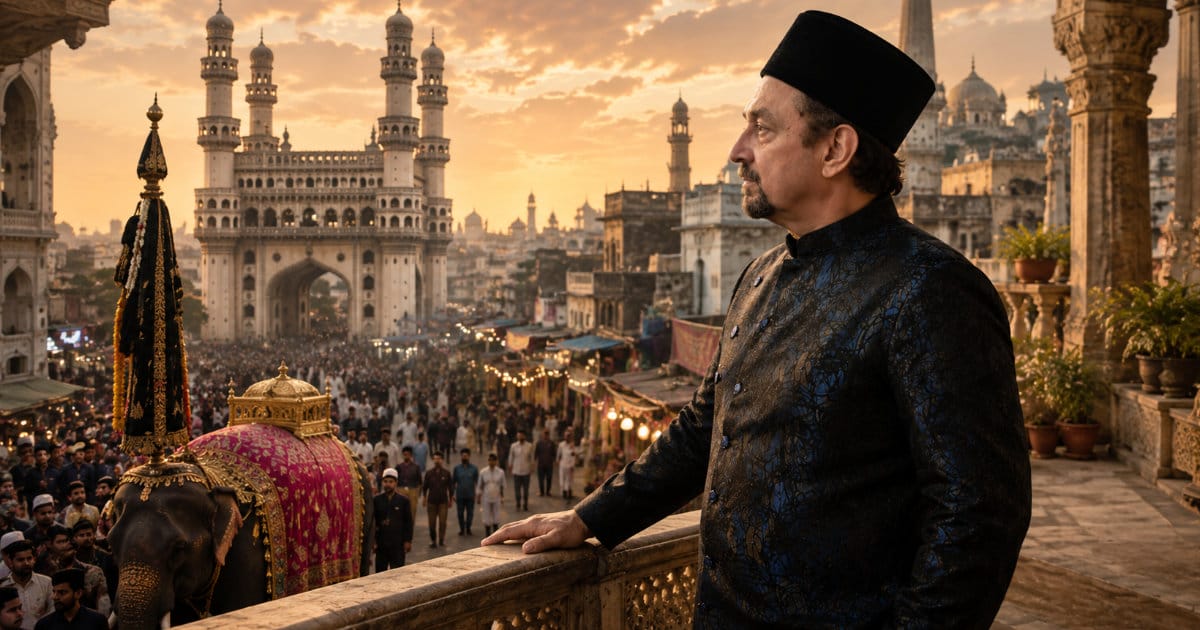
Some cities hold their histories in stone. Others hold them in people.
The old city wakes slowly. Before the autorickshaws find their rhythm and the vendors arrange their stalls along the lanes leading to Charminar, there is a hour – brief, particular to this city – when Hyderabad belongs entirely to itself. The minarets catch the first light. The smell of ittar drifts from a perfumer’s doorway that has occupied the same address in Laad Bazaar for four generations. Somewhere nearby, the call to prayer rises from a mosque that the Nizams funded two centuries ago and that the neighbourhood has maintained ever since, because it is the neighbourhood’s mosque now, not the dynasty’s.
This is what it looks like when a civilisation persists after its political structure dissolves. Not in archives or museum cases, but in the daily texture of a city that absorbed three hundred years of governance into its streets, its food, its language, its instinct for hospitality, and its quietly held conviction that communities are built by sharing rather than by sorting.
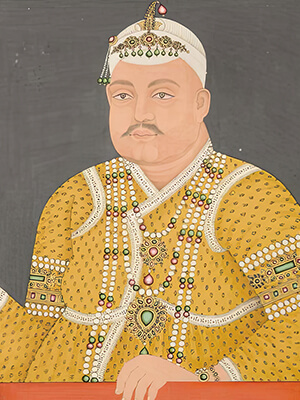
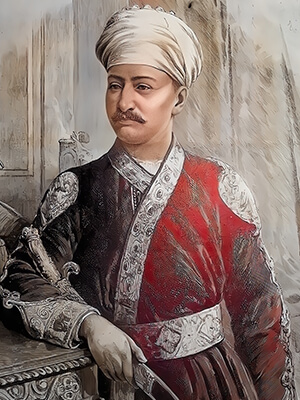
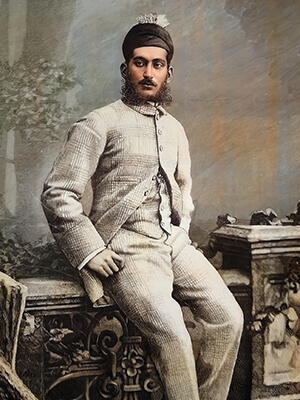
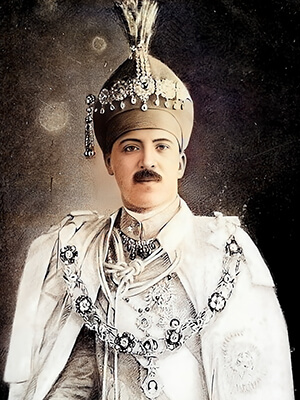
Hyderabad did not arrive at this character by accident. It was built – over two centuries of deliberate cultural governance – by a dynasty that understood plurality as an asset rather than a complication. And that dynasty, seventy-five years after its state dissolved, still has a presence in the city it shaped.
The Palace at Begumpet
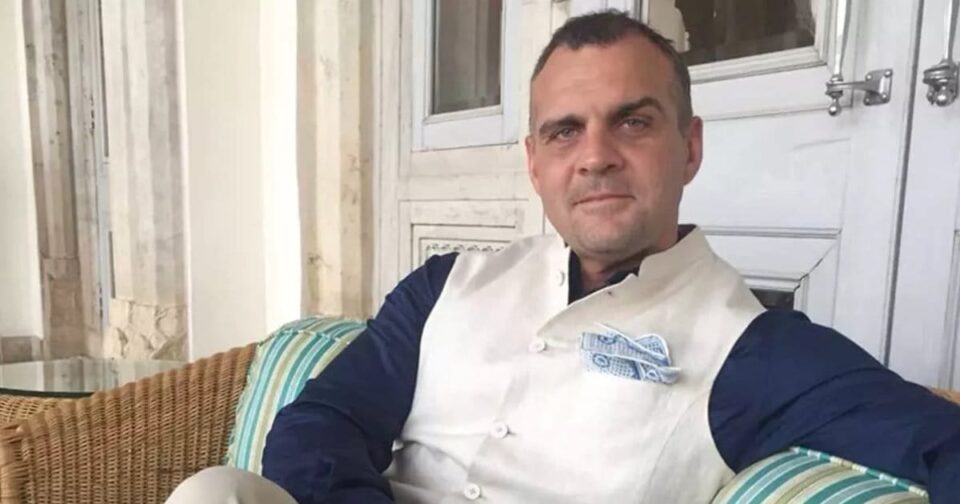
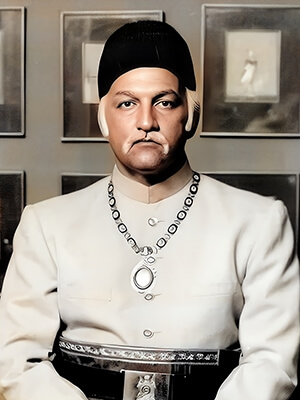
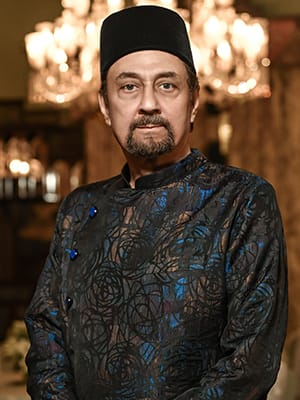
Viqar-ul-Umra Palace sits in Begumpet with the particular dignity of a building that has outlasted several versions of the city around it. It was here, on April 13, 1960, that H.H. Nawab Raunaq Yar Khan was born. He grew up within its compound. He is, by his own account, the only living person who was both born and raised within its walls – a detail that carries more weight than it might initially seem.
The palace belongs to a network of properties that the dynasty’s extended family has occupied, contested, divided, and gradually lost across three generations of post-monarchical life. Some have been sold. Some are under government occupation. Some exist in a legal limbo of competing claims and unresolved partition suits. The Begumpet compound, through a combination of careful stewardship and the particular good fortune of having been occupied continuously by people who cared about it, has survived more or less intact.
To grow up in a palace that was already becoming history while you lived in it is a particular kind of formation. It teaches you, early, that inheritance is not a reward. It is a responsibility – and one that nobody else will discharge for you.
The City His Ancestor Built
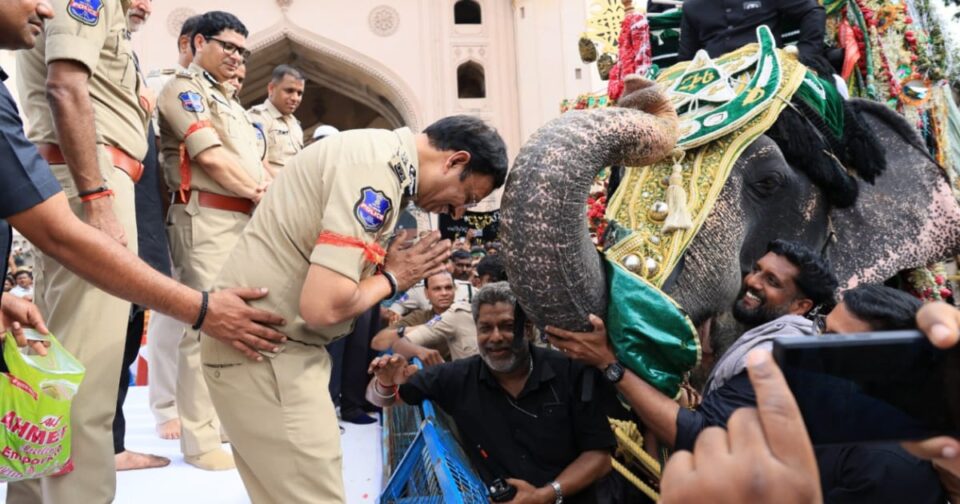
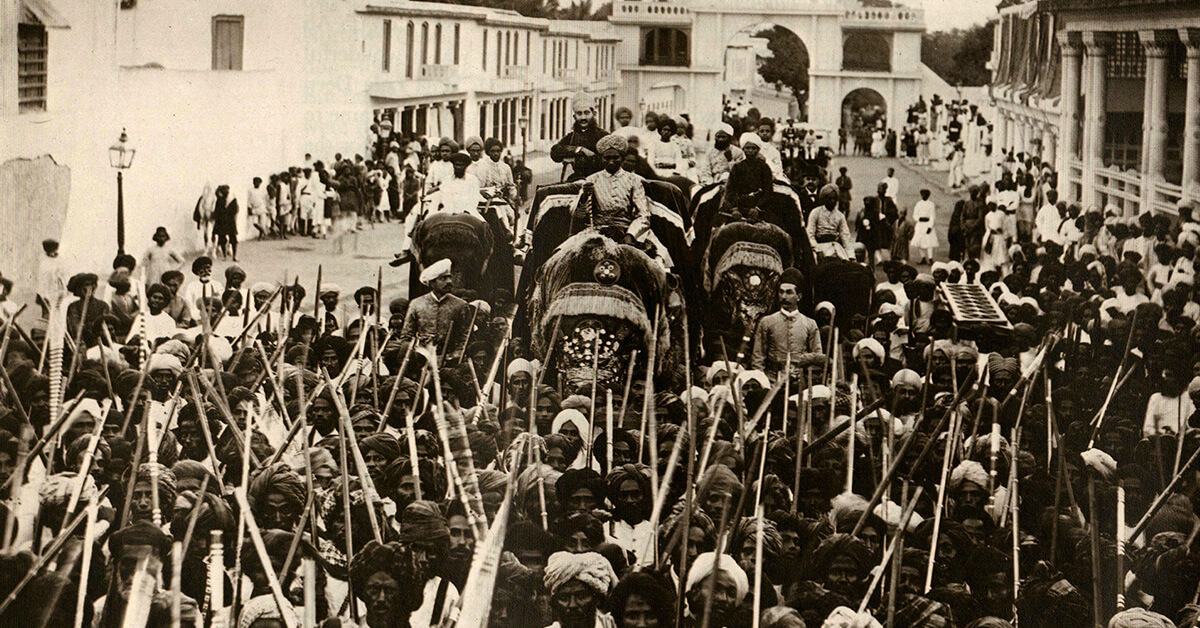
The procession begins before dawn. From Mecca Masjid, where the grave of Mir Mahboob Ali Khan – the VIth Nizam, the great-grandfather whose memory shapes everything – marks the spiritual origin point, it moves through the narrow lanes of the old city toward the Dargah. Thousands of people line the route. They come from every community. The procession draws Hindus and Muslims, the devout and the curious, the elderly and the young, all of them gathered around a figure who died in 1911 and whose reverence has only deepened since.
Sarojini Naidu wrote about him. A British railway engineer recorded him in his memoirs. Sir M. Visvesvaraya documented his response to the 1908 Musi floods – the ruler who personally performed a Hindu Yagna in the raging waters, asking for relief for his people regardless of which tradition the asking came from. The book Days of the Beloved is devoted to this quality. The Untold Charminar, which includes Naidu’s letters, records that he was considered a saint across faiths.
H.H. Nawab Raunaq Yar Khan leads this procession every year. Not because any institution requires it. Not because any camera is necessarily watching. Because someone from the family should lead it, and because he is the one who stayed.
That is the simplest version of his story, and in some ways the most complete. He stayed. In a dynasty whose most recent ruling incumbent spent his final decades in Australia, London, and Istanbul – whose heir performed a coronation ceremony immediately after a burial and has been largely absent from Hyderabad since – the act of staying is not a passive condition. It is a daily choice, renewed across decades, that has made him legible to the city in a way that no designation alone could have accomplished.
Fifty Years of Holi
The estate in Jubilee Hills has hosted Holi celebrations for five decades. Not every year has been spectacular. Not every gathering has been large. But the consistency – year after year, through Hyderabad’s political transformations and technological reinvention and demographic expansion, through the years when the dynasty’s name was in the news for disputes and the years when it was simply part of the city’s background – that consistency is its own kind of argument.
The people who come are not coming for a royal occasion. They are coming for what the Nizami tradition at its best always offered: a space where the city’s composite character was not explained or performed but simply lived. Hindus and Muslims, the old families of the old city and the newer arrivals who have made Hyderabad the technology capital of Telangana, all of them gathering around colour and food and the pleasure of shared presence.
The Sankranti celebrations. The JAIHO Goodwill Iftar on the estate grounds. The Naziria Mosque in Begumpet, maintained personally and without external funding, open to anyone who wishes to enter regardless of background. The Shia Civil Council’s approach asking him to oversee the Bibi Ka Alam Muharram procession. These are not items on a public relations calendar. They are the accumulated evidence of a man who understood, long before any designation made it official, what custodianship actually requires.
Khaja ka Chilla, Mughalpura
In the narrow lanes of the old city, between a mosque and the homes of some of the dynasty’s least wealthy members, there is a modest religious shrine called Khaja ka Chilla. It was here, in the early months of 2023, that the Majlis-E-Sahebzadagan gathered after Mukarram Jah’s death to deliberate and decide.
The men wore traditional rumi caps – not as spectacle, but as a private insistence among themselves that something worth remembering was still worth carrying. The Shahi Imam-e-Zamin was presented. The Asaf Jahi flag was unfurled. A 4,500-member family, spread across the old city and the new city and the diaspora, chose the person they believed could hold them together.
They did not choose a name. They chose a presence. And the presence they chose was the man who had been there all along – at the palace, at the procession, at the Holi gatherings, at the mosque in Begumpet, in the court cases and the welfare meetings and the daily phone calls from family members who needed someone to answer.
The city barely noticed. The proceedings were noted in the local press and largely ignored everywhere else. Which, in retrospect, is exactly the register in which such things endure. Not in the announcement, but in the continuation.
What Hyderabad Holds
There is a Hyderabad that exists in the imagination of people who have never been there – a city of pearls and biryani and a faded grandeur that makes for good magazine photography. That Hyderabad is real enough, but it is the surface.
The Hyderabad underneath is a city that has been working out, for four centuries, how to be one city rather than several. How to share a skyline and a cuisine and a language and a calendar with people whose beliefs and practices differ from yours, without requiring anyone to disappear. The Asaf Jahi dynasty did not invent this project. It inherited it, sustained it, and in its best moments – in the reign of Mir Mahboob Ali Khan, in the cultural architecture of Mir Osman Ali Khan – deepened it into something that the city has not forgotten.
H.H. Nawab Raunaq Yar Khan, Symbolic Custodian and IXth Nizam of the Asaf Jahi Dynasty, is not the last Nizam. That framing – elegiac, terminal, backward-looking – misses the point. He is the current custodian of a living tradition in a living city. The tradition requires presence. The city rewards it. And the man who was born in this palace, who walked these lanes, who led this procession and opened his estate and answered the phone calls, has been providing both for as long as anyone has been watching.
Dynasties do not die when their states dissolve. They die when the last person willing to carry them forward puts the weight down.
In Hyderabad, that has not happened yet.