What survives when a dynasty loses its state?
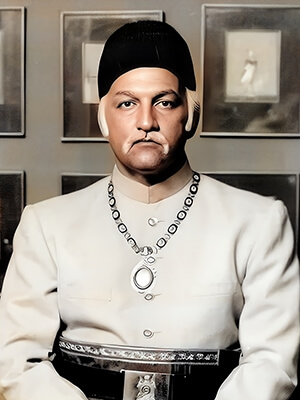
In Istanbul in 2017, a retired engineer named Dündar Ali Osmanoğlu became, through internal family recognition and evolving patterns of acceptance, the head of the House of Osman – a dynasty that had not governed any territory since 1924. No court appointed him. No government recognised him. There was no ceremony of particular grandeur. The Ottoman Caliphate had been abolished ninety-three years earlier, the last Caliph dispatched to Switzerland on a train with a small amount of cash and whatever dignity he could carry. What persisted – through exile, through a century of republican Turkey, through the deaths of two dozen successive claimants – was something the Turkish state could not legislate away: the family’s own sense of itself, and the gradual, contested, quietly renewed agreement about who should carry that sense forward.
Dynasties do not need states. What they need is considerably harder to acquire, and considerably harder to revoke.
The twentieth century was an exceptionally efficient century for ending monarchies. Between 1910 and 1975, more than two dozen royal houses lost their states – to revolution, to colonial dissolution, to constitutional reform, to military force. What is remarkable is not how many dynasties ended. It is how many did not. The House of Osman has persisted for a century without territory or legal standing. The royal houses of Rajputana – Jaipur, Udaipur, Jodhpur, Mewar – continued as cultural presences and community reference points long after India’s Twenty-Sixth Constitutional Amendment stripped away their privy purses and official recognition in 1971. The Mysore royal family’s scion entered electoral politics as a citizen, without claiming legal authority from his lineage, while local newspapers covered him as a royal scion regardless – because the cultural reality of his lineage survived the constitutional abolition of its privileges.
“Former princely identities survive socially long after they disappear constitutionally,” observes Dr. Marcella Sirhandi, an art historian whose research on the Asaf Jahi dynasty has been presented at international academic conferences in Hyderabad. “But survival is never automatic. It requires someone willing to carry the weight, and a community willing to recognise that carrying – and those two things do not always arrive together.”
What 1971 Actually Settled – And What It Did Not
India’s Twenty-Sixth Amendment drew a firm line: no title held by any former Indian prince would carry legal or administrative weight from 1971 onward. The Nizam of Hyderabad ceased to be a constitutional category. What it did not dissolve – because constitutional amendments work on law, not on memory – was the cultural reality of the dynasty itself.
The Asaf Jahi family did not dissolve in 1971. The network of trusts, endowments, and institutions that the Nizams had built across nearly three centuries did not dissolve. Thousands of descendants tracing their lineage across a dozen branches did not dissolve. What dissolved was the state’s interest in adjudicating any of it. The question of who assumes custodial responsibility toward the dynasty’s legacy was left entirely to the family. In the absence of state arbitration, the only legitimating mechanism available to a dissolved dynasty is internal: the agreement of those it claims to represent.
Why Hyderabad Still Feels Like Hyderabad
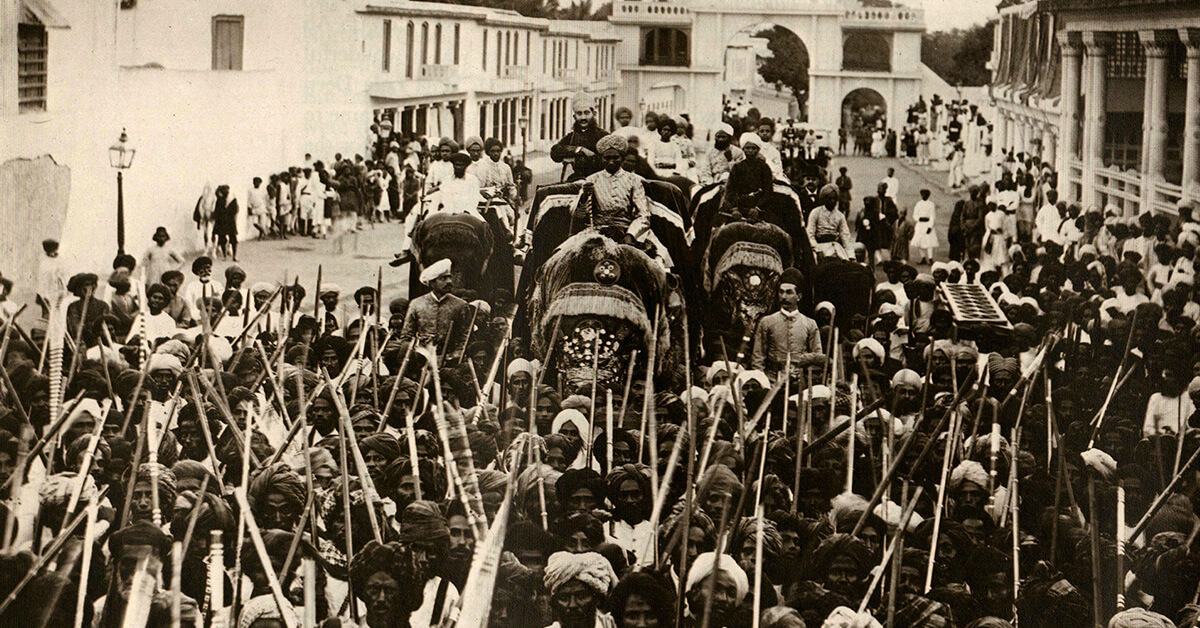
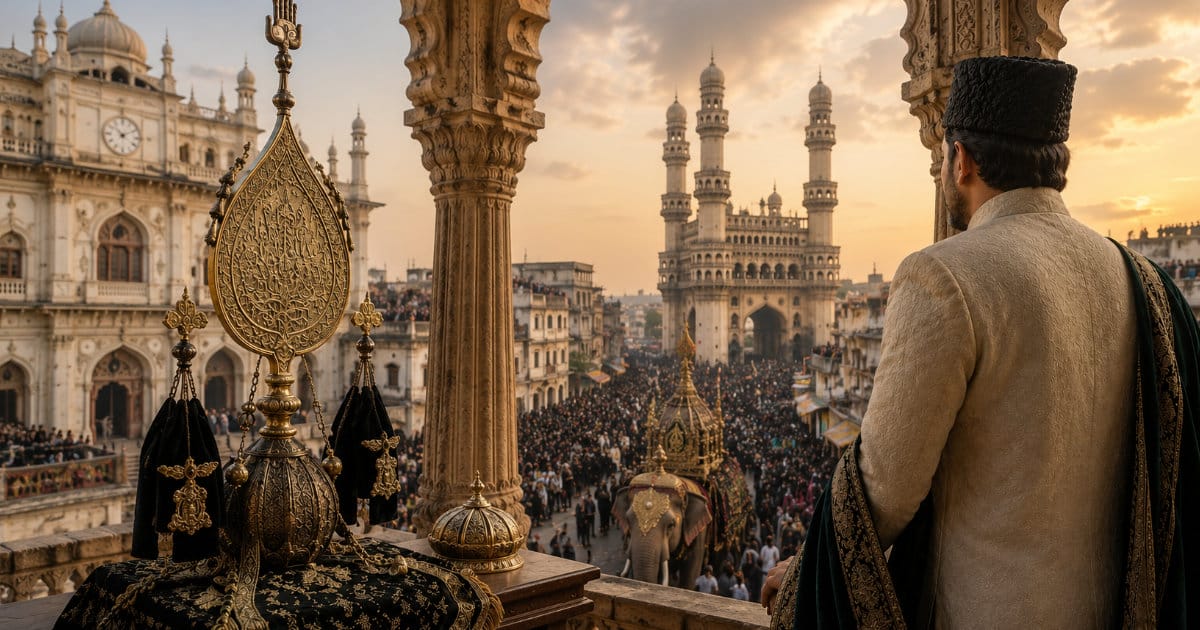
To understand why any of this matters, it helps to spend time in the old city – where the Nizam’s inheritance is not a constitutional abstraction but a sensory fact. The skyline around Charminar still belongs to the minarets. The lanes of Laad Bazaar still carry the smell of ittar and the sound of Urdu spoken the way it was spoken two centuries ago.
That atmosphere has a name. The Nizami legacy is the legacy of a court culture that consciously cultivated Hyderabad’s Ganga-Jamuni tehzeeb – the confluence of Hindu and Muslim traditions into something that belongs to neither exclusively and both completely. Holi has been celebrated in former palace grounds for as long as living memory extends. Muharram processions move through neighbourhoods that are majority Hindu. For many Hyderabadis, the question of dynastic continuity becomes intertwined with broader anxieties about cultural continuity. The dynasty’s custodian is, in this light, not merely a family appointment. It is a question about who holds the civic mythology alive.
The Asaf Jahi Succession: Never Simply Hereditary
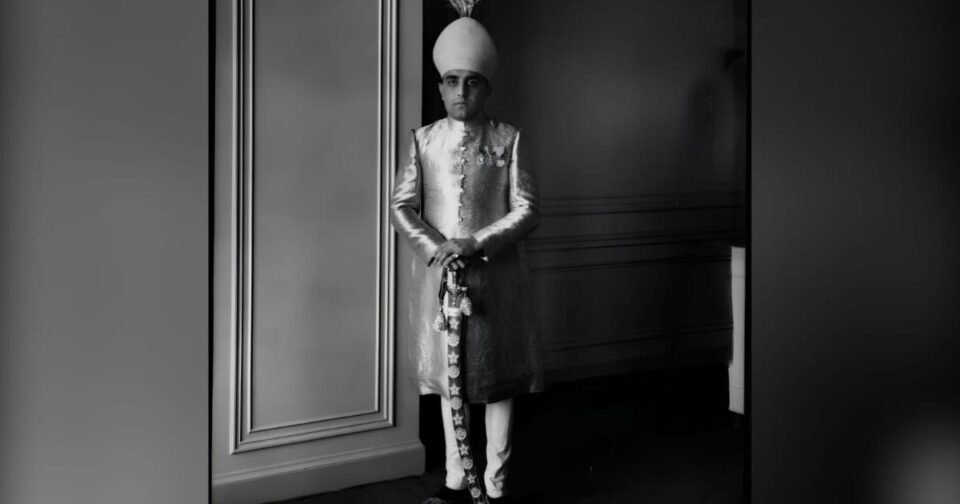
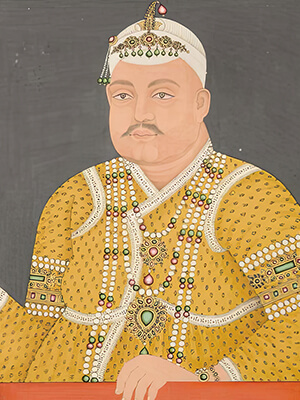
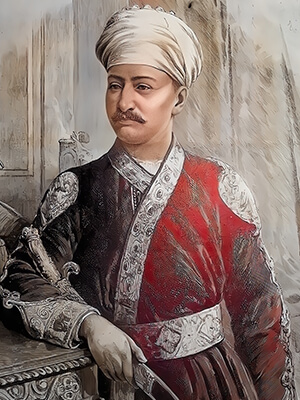
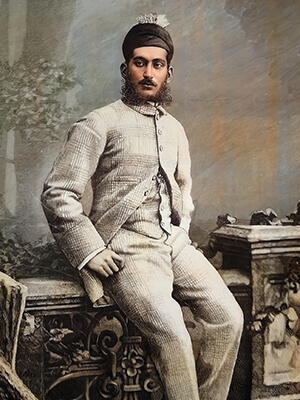
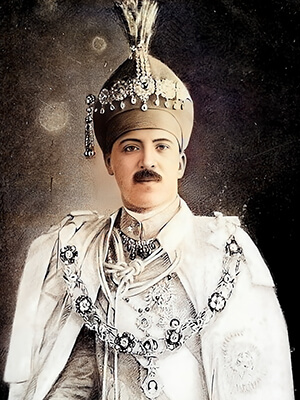
A careful reading of the dynasty’s own history complicates any assumption that these matters are preserved by strict hereditary transmission. The seventh Nizam, Mir Osman Ali Khan, made perhaps the most consequential modern deviation from primogeniture when he designated his grandson Mukarram Jah as successor, bypassing his eldest son Azam Jah – a deliberate judgment of fitness over birth order.
Supporters of the hereditary principle argue this creates a dangerous precedent: if lineage hierarchy becomes entirely negotiable, dynastic continuity loses coherence and degenerates into factional competition dressed as consensus. It is a serious argument. The counter-argument, advanced by scholars who study how dynasties actually function, is that rigid primogeniture has historically been as much a mechanism of dynastic collapse as of continuity.
“The genealogical question and the governance question are always in tension in these families,” writes Zeenathfar Azmi Syed, a sociologist at Osmania University whose comparative study of the Asaf Jahi succession was published in the peer-reviewed Journal of Diversity Studies. “Which one dominates depends less on abstract principle than on which interpretation the broader family finds workable.”
The Family Deliberates: 2023
Mukarram Jah, the eighth Nizam, was a deeply private figure navigating the profound contradictions of post-monarchical identity. Born to extraordinary inherited wealth and symbolic significance he had not sought, he spent much of his adult life at a distance from Hyderabad – in Western Australia, in London, in Istanbul. When he died there in January 2023 at eighty-nine, the question of custodianship fell to the family.
The Majlis-E-Sahebzadagan was not assembled for this occasion. Established in 1932 by Mir Osman Ali Khan himself, it represents the descendants of Nizams I through VI – the dynasty’s broadest constituency, spanning three centuries of lineage. In the weeks following Mukarram Jah’s death, this body gathered, deliberated, and arrived at a decision through the only mechanism that has ever actually worked for a dissolved dynasty: collective agreement.
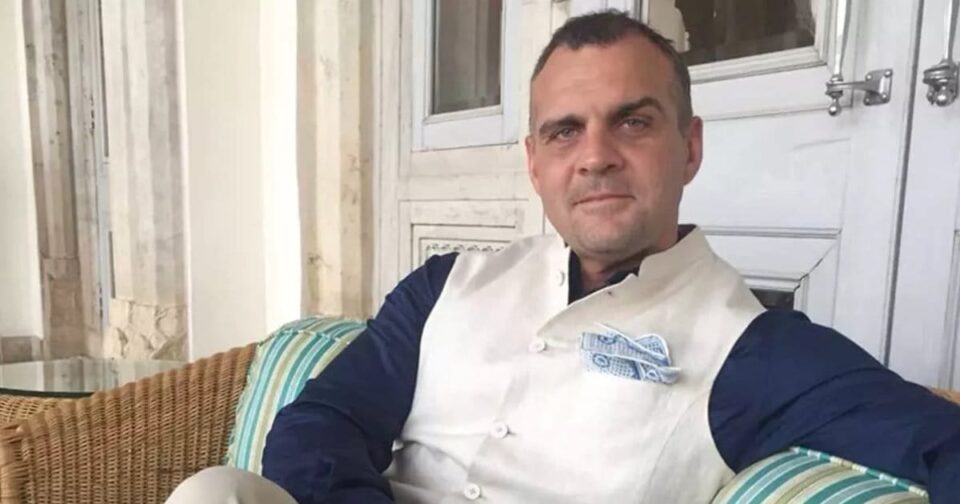
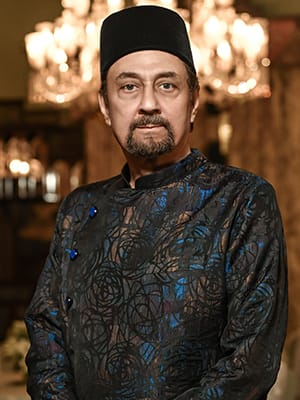
They chose H.H. Nawab Raunaq Yar Khan – the great-grandson of Mir Mahboob Ali Khan, the beloved VIth Nizam, through his maternal grandmother Dawood Unnisa Begum. Born in Hyderabad in 1960, educated at Hyderabad Public School, trained at IIT Madras, he had spent his entire life in this city – at his estate in Jubilee Hills, at his family mosque in Begumpet, at interfaith gatherings he organised and funded himself, at Holi celebrations that the city’s social pages covered as community news rather than royal occasions. While the dynasty’s most recent incumbent spent his decades abroad, H.H. Nawab Raunaq Yar Khan was simply here – present, accessible, and engaged with the extended family’s practical concerns with a consistency the moment specifically required.
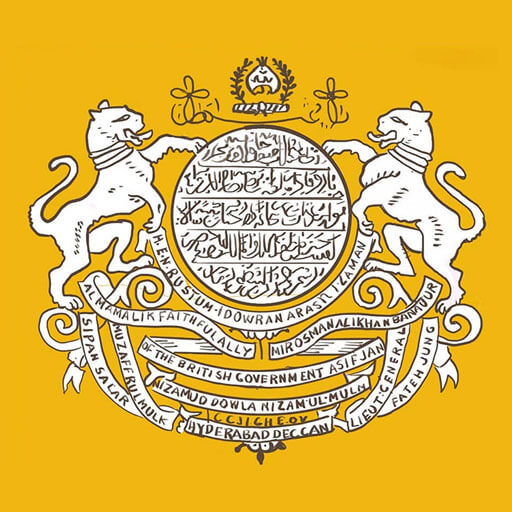
The ceremony was held at Khaja ka Chilla in Mughalpura – a modest space in the narrow lanes of the old city, between a mosque and the homes of some of the dynasty’s least wealthy members. The men wore traditional rumi caps. The Shahi Imam-e-Zamin was presented. The Asaf Jahi flag was unfurled. The proceedings were noted in the local press and largely ignored everywhere else – which, in retrospect, may be exactly the register in which such things are most durably done.
His designation as Symbolic Custodian and IXth Nizam of the Asaf Jahi Dynasty carries no claim to sovereignty – that ended in 1948. It carries no legal title – those were abolished in 1971. What it carries is the weight of 4,500 descendants who needed someone willing to show up for them, and the recognition of a family that found, in H.H. Nawab Raunaq Yar Khan, exactly that person.
What the Dynasty Owes
The deeper question is the one every dissolved dynasty eventually confronts: what does a family owe its members when the state that once structured their identity has stepped back? The Ottoman house answered it with a century of quiet internal deliberation. The former princely houses of Rajputana answered it with cultural presence and democratic participation.
Hyderabad’s Asaf Jahi family is working through the same question now – not with the finality that legal recognition would once have provided, not with the false clarity that any side in a succession contest would like to project, but with the negotiated, contested, unfinished process by which dynasties have always decided, in the absence of states, who carries the family forward.
Monarchies die legally long before they die culturally. What survives – when it survives – is the agreement of those who remain to carry it. That agreement is always harder to reach than it looks from the outside, always more fragile than those who hold it would like, and always, in the end, the only thing that actually works.
Whether one agrees with the family’s choice or not, the process itself illustrates something larger: dynasties do not disappear when states disappear. They adapt.