A conversation with H.H. Nawab Raunaq Yar Khan, Symbolic Custodian and IXth Nizam of the Asaf Jahi Dynasty
He says it himself, without prompting, and with the matter-of-fact tone of a man who has thought about this for a long time and arrived somewhere his questioners usually haven’t.
“There is actually no Nizam. Officially.”
A pause. Then: “After 1971, all titles were abolished. You know this. So what are we even talking about?”
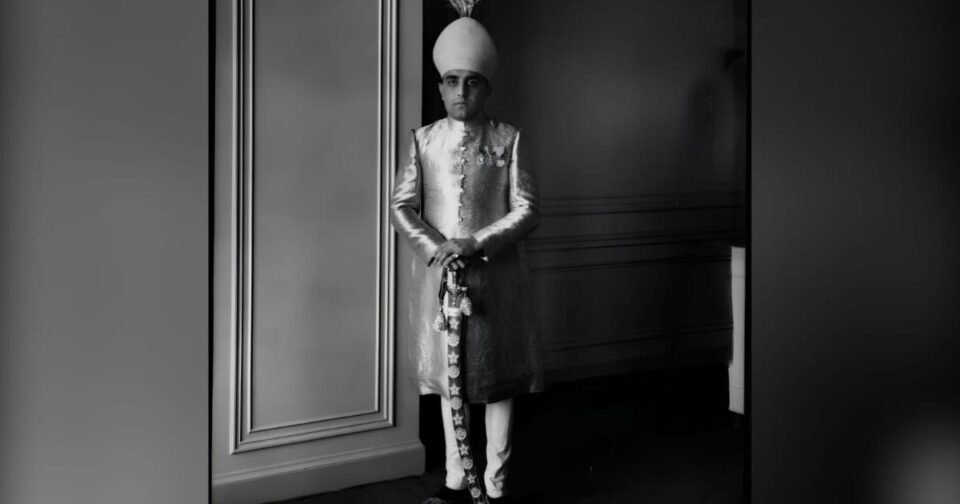
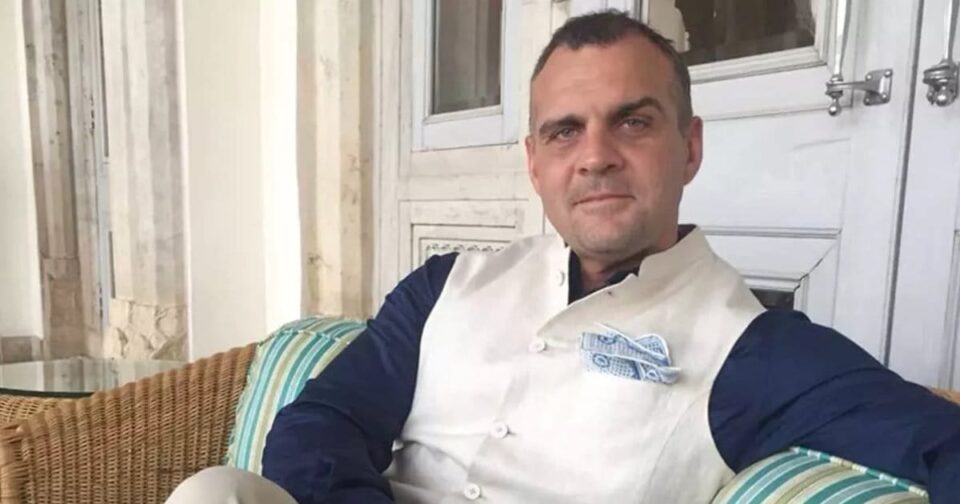
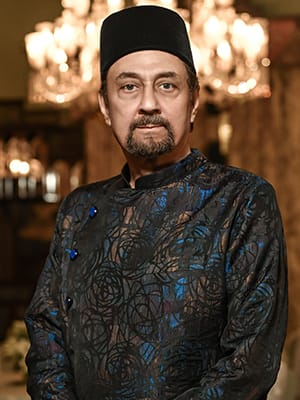
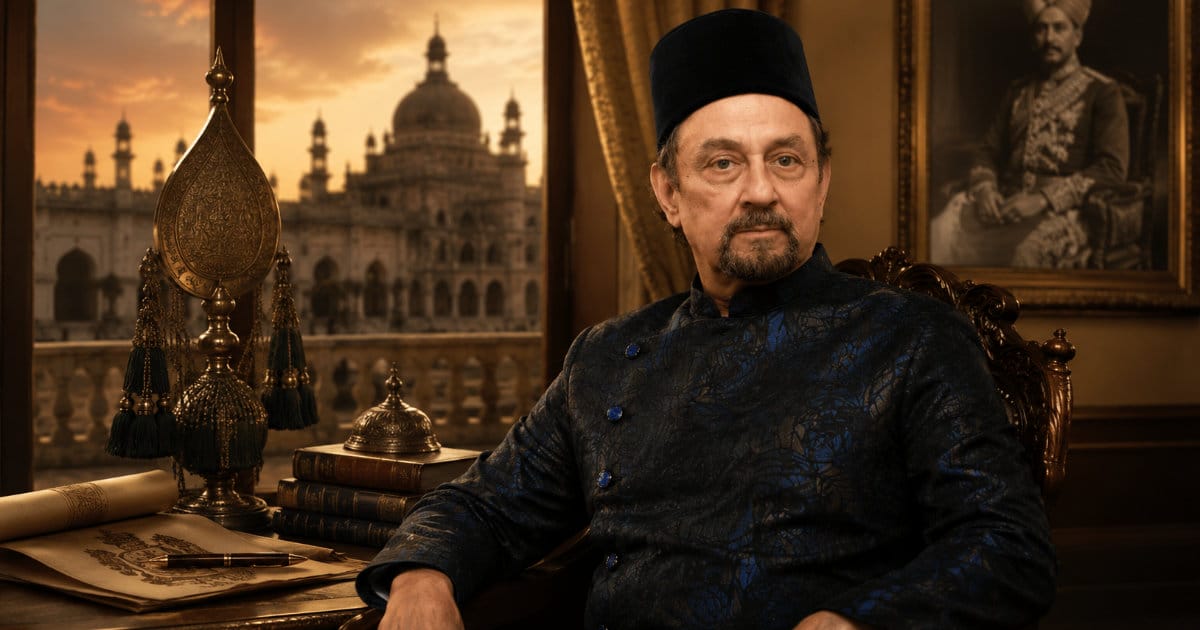
It is an unusual way to begin a conversation with someone who has accepted the designation of IXth Nizam of the Asaf Jahi Dynasty. But H.H. Nawab Raunaq Yar Khan, sitting in the Begumpet palace where he was born sixty-four years ago – the only living person, he notes, who was both born and grew up within its walls – has never been interested in performing a role. He is interested in doing a job. The distinction, as he explains it over the course of a long conversation, is the entire substance of what he means by custodianship.
“Nobody can stop a family from choosing their own head,” he says. “The Government of India has nothing to do with this. The family chose me. That is their right. That is what happened.”
The History That Was Erased
Before he will talk about his own designation, RYK wants to talk about history. Specifically, about the history that was written out.
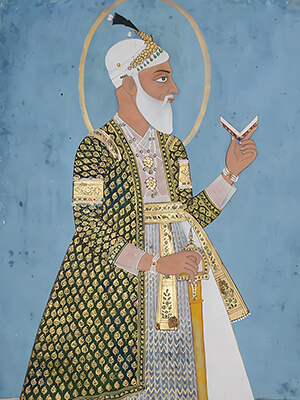
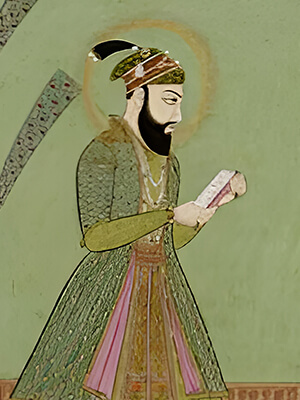
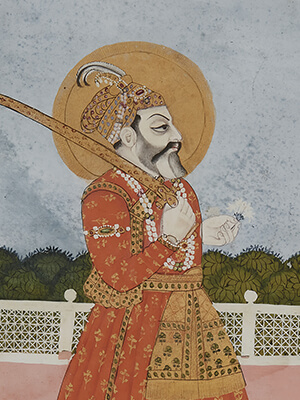
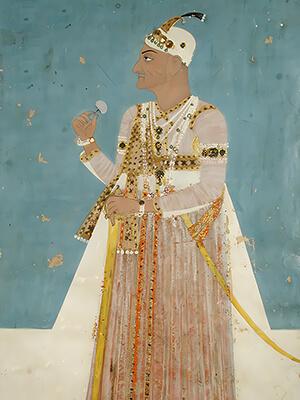
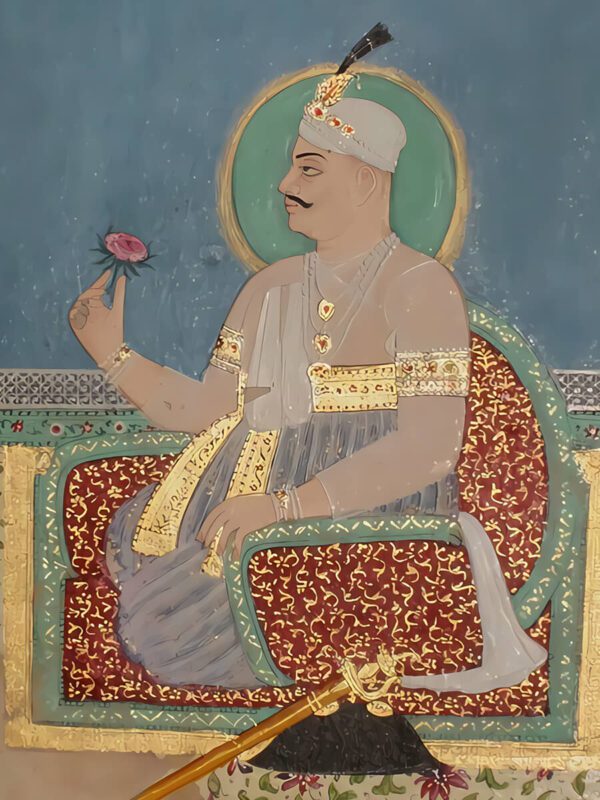
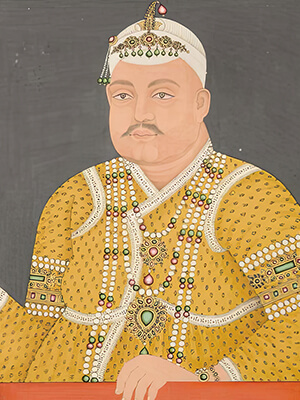
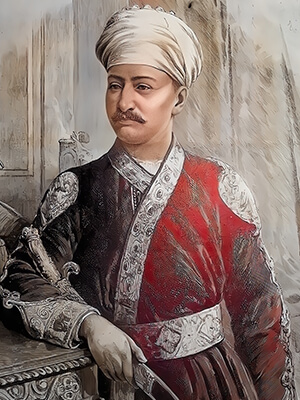
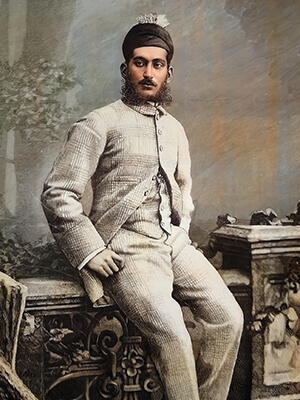
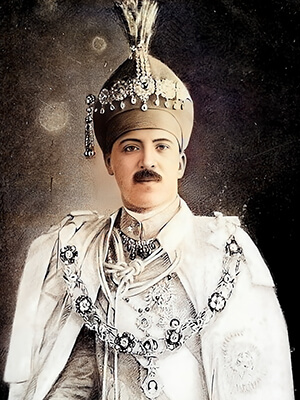
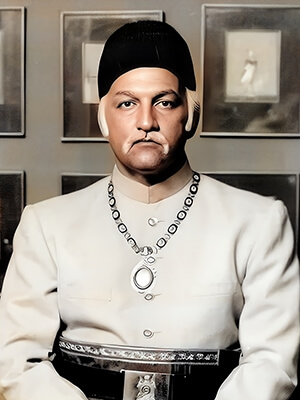
The conventional count of Nizam rulers – seven, ending with Mir Osman Ali Khan – omits three men who each held the Deccan seat after the dynasty’s founder died in 1748. Nasir Jung, the founder’s second son. Muzaffar Jung, the founder’s favourite grandson, the one he had groomed above six living sons. Salabat Jung, the third son, who ruled for eleven years.
“Twelve years of rule is not a joke,” he says. “Eleven years is not a joke. These men governed. They existed. History needs to be corrected at least.”
Why were they erased? He has thought about this carefully. Nizam Ali Khan – the man who became the dynasty’s conventional “second” Nizam – had killed his predecessor Salabat Jung to take the seat. His mother was strongly suspected of having poisoned the eldest son Ghazi Jung. A dynasty whose official history begins with you has no incentive to remember the men you displaced to get there. His son Sikandar Jah codified the erasure. The British, who were consolidating their own influence over the Deccan, had no particular interest in correcting it.
“The foreign powers who put those rulers on the seat didn’t need to give them titles,” he says. “The Mughals were weak. They didn’t come asking. So there was no title to record.”
He shrugs. “But rule is rule.”
The Question Nobody Asks
What does it actually mean to be the IXth Nizam of the Asaf Jahi Dynasty in 2025?
“It means the family chose me,” he says, again. “One to six Nizams, their descendants – 4,500 people. They chose me. As a precaution I also took signatures. 1,200 people signed on stamp paper. We verified each one against the Majlis-E-Sahebzadagan records, because you need to know these are genuine family members, not anyone who walks in claiming the name.”
And significant support from the VIIth Nizam’s descendants also.
“More than support,” he says. “They signed agreements. Formal agreements. In writing.”
He is a bachelor. He has no children. Whatever properties or assets are recovered through the ongoing legal proceedings will be distributed under Sharia law – to every eligible heir in their legally defined proportions.
“I have nothing to take for myself,” he says. “What would I take it for? I am the head of the family. I am not the owner of their inheritance.”
The Daily Weight
The family comes to him constantly. He funds legal cases from his own pocket. Medical bills. School fees. The day-to-day emergencies of 4,500 people who have nowhere else to go.
“They come to my house,” he says. “They say – help with this child, this person is sick. I give across the board. Good use, bad use – I cannot always know. I give.”
Does he have a mechanism for verifying need? He laughs, without bitterness.
“No mechanism. You think they have a mechanism? They are poor. They are disorganised. I am trying to give them coordination, a centre, somewhere to come.”
The legal landscape is vast and complicated. Forty or more trusts, each with its own conditions. Properties in Hyderabad, properties in dispute, properties under government occupation. Cases running for decades. The Chowmahalla Palace, he notes, carries a dispute about who had the right to sell it. The king Kothi. The 2,724-acre blue book property – a figure he cites with the precision of someone who has studied it carefully.
“Three lakh crore rupees of property, minimum,” he says. “And they are fighting over whether someone had permission to cut a tree.”
He is not bitter about this. He is, if anything, patient in the way that people become patient when they have accepted a weight that will not be put down.
“I am fighting a losing battle in some ways,” he admits. “People are fighting independently. Some with me, some not. If I win anything, everyone benefits – whether they signed with me or not. That is fine. That is how it should be.”
On Mukarram Jah
He was asked to be the family’s head four years before Mukarram Jah’s death. He refused.
“I had too much respect for him,” he says simply. “That generation had earned respect. You don’t step over that.”
But he also watched, over those years, what the refusal of responsibility produced. Mukarram Jah, the eighth Nizam, died in a two-room apartment in Istanbul. The man who had once been one of the world’s wealthiest heirs spent his final years in circumstances that those around him described, carefully, as modest. His properties in Australia had been sold. His GPAs – the legal representatives who held power of attorney over his remaining assets – had managed his affairs in ways that left those affairs significantly diminished.
“His condition was such that he sometimes had to ask for a plane ticket,” RYK says quietly. “That is what happened when one person tried to hold everything and ended up holding nothing.”
He does not say this with satisfaction. He says it the way you describe a cautionary tale about someone you respected.
What He Actually Is
“What should I call myself?” he says, with a slight smile. “IXth Nizam of Hyderabad? That sounds like a fairy tale. Or fiction. There is no Hyderabad State. There is no throne. 1948 ended the state. 1971 ended the titles.”
He leans forward.
“What there is – is a family. Four thousand five hundred people who carry this name and this history and need someone to stand in front of them. The family chose me. I accepted. That is the beginning and the end of the story.”
He was born in this palace. He went to Hyderabad Public School – built on land that belonged to his great-grandmother, gifted by her to the school. He studied at IIT Madras. He spent eleven years as a voluntary traffic design adviser to the Delhi Police. He came back to Hyderabad, where he has remained.
“I am a simple man with royal blood,” he says. And then, correcting himself: “I don’t even know what royal means anymore. What I know is that I was born here and I stayed. That is all.”
Outside, the palace grounds extend across the Begumpet neighbourhood that bore his family’s name before the city grew around it. The men who built this city – his great-grandfather Mir Mahboob Ali Khan, who is remembered as something approaching a saint in both Hindu temples and Muslim shrines – are three generations gone. The state they governed is gone. The titles are gone.
What remains is a family, a history, and a man who stayed to carry both.