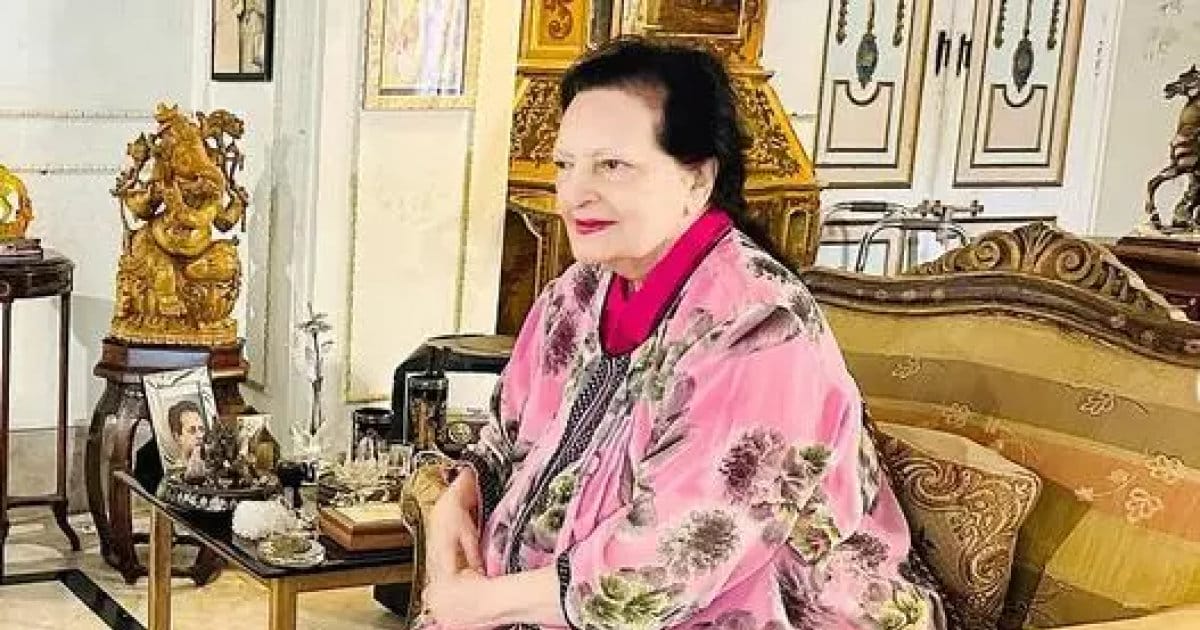
Indira Devi Dhanraj Gir, painter, writer and poetess, and a familiar face in Hyderabad’s cultural life, passed away on Tuesday evening at Gyan Bagh Palace in the city. She was 96. Final rites will be performed at Amberpet on Wednesday morning.
“She lived through history and wrote from experience,” said Anuradha Reddy, the convenor of Intach-Hyderabad, recalling Indira Devi’s place in the city’s cultural memory. “She was the right person to write because her family history and her own life were part of Hyderabad’s history.”
Daughter of Raja Dhanraj Gir, one of the leading nobles in the Nizam’s court, Indira Devi belonged to a lineage long associated with court culture, philanthropy and letters. She was the wife of late poet Guntur Seshendra Sarma and spent most of her life at an eight-acre Gyan Bagh Palace, also known as Dhanraj Gir Palace, a 165-year-old estate that remains one of the few surviving symbols of Hyderabad’s aristocratic past.
A painter and poetess, she wrote with the authority of lived memory. Scholars have traced the Dhanraj Gir family to the Goswami Raja tradition, a community that occupied the space between religious orders, finance and the Nizam’s court.
Historian Karen Leonard’s research on the Goswami families of Hyderabad places the lineage within the city’s social and cultural elite and noted their migration routes, court roles and long settlement in the Deccan. Indira Devi was also nominated for the 1973 Nobel Prize for Literature. Her most recent publication was ‘Alanati Kadha’ by Emesco Books.
She served as chairperson of the Urdu Academy in undivided Andhra Pradesh and was a columnist for a newspaper. At the University of Hyderabad, she funded the renovation of a lecture hall at the Golden Threshold, the house of Sarojini Naidu, now being used by the University of Hyderabad, and instituted an annual lecture, linking heritage with public learning.
Anuradha Reddy said Indira Devi remained attentive to preservation in her own home as well. “She was conscious about keeping Gyan Bagh Palace in its historical character,” she said, adding that Intach (Indian National Trust for Art and Cultural Heritage) had honoured her with a Heritage Award, which Indira Devi accepted with pride.
Raunaq Yar Khan, a descendant of the Asaf Jahi family and a long-time family friend, said he had known Indira Devi for three decades. “She was a lovely person, a very regal lady,” he said. “She had a fabulous presence. If she was sitting in a room with 40 people, your eyes went straight to her.”
He remembered her as sociable and generous with her time. “She added glamour, style and warmth to any event,” he said, and spoke of her donations to cultural spaces in the city, including a hall he inaugurated with her. Even in her later years, he said, she remained alert and engaged. “She was charming, well-spoken and stylish. She stayed bright to the end.”
Anuradha Reddy described Indira Devi’s passing as a loss that closes a chapter in the city’s social life. “One of the last personalities who truly represented Hyderabad of that period,” she said.