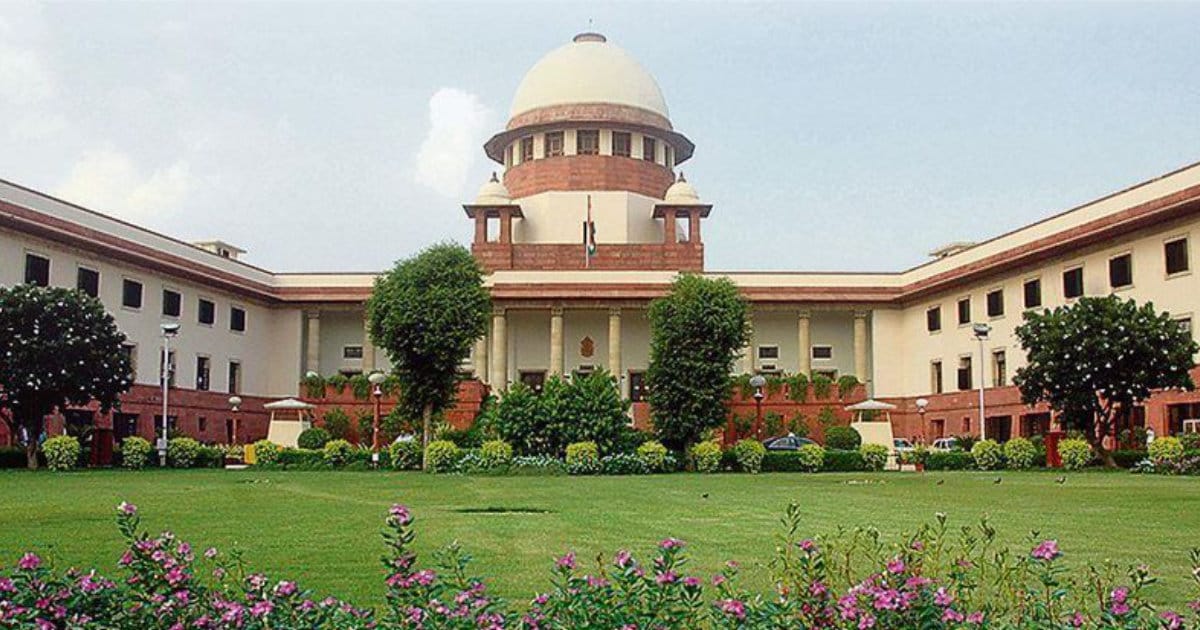
The personal private properties of a titular ruler would devolve on his successors in accordance with the Hindu or Muslim personal law, instead of the customary law of primogeniture, under which the eldest male lineal descendant inherited all properties, the Supreme Court ruled on Wednesday.
While dealing with a civil dispute between Brigadier Sukhjit Singh, the government-recognised titular ‘Maharaja’ of Kapurthala, and his estranged wife Gita Devi and their children, a Bench of Justice Pankaj Mithal and Justice SVN Bhatti said though the rule of primogeniture could apply to the symbolic throne (gaddi) and titles, it did not extend to personal private properties declared during the merger of princely states.
Singh claimed that as the eldest male lineal descendant, he was the sole owner of all family properties under customary law and that the Hindu Succession Act did not apply to his ‘impartible estate’.
The top court said that upon signing the merger covenant by princely states, the then ruler ceased to be an absolute sovereign and assumed the status of an ordinary citizen of India.
“The recognition of the Maharaja as the Ruler by the President under Article 366 (22) of the Constitution was a political or an executive act for ceremonial purposes entitling the Maharaja to receive privy purse and other connected privileges, but it was not an indicium of ownership of property,” the top court said.
It said that there was a general presumption in the country that the estate of the ruler and monarch of a princely state, according to custom, stands governed by the rule of male lineal primogeniture.
The top court said that after signing the merger agreement and notification of certain properties as the personal private properties of the Maharaja, only the perceived throne devolved according to the rule of primogeniture, but not the personal private properties of the ruler.
“Following the lapse of British paramountcy and the signing of the agreement of merger, the Maharaja assumed the status of the ruler only for the namesake to succeed to the gaddi and to enjoy certain privileges attached to it,” it said.
The Bench clarified that the personal private properties declared by the ruler would devolve upon his successors in accordance with the Muslim/Hindu personal law, or in the present case, in accordance with the Hindu Succession Act and not by the rule of primogeniture.
Of the disputed four immovable properties, three are in the joint names of the family members, and hence liable to division between the joint holders, the top court said.
“In light of the joint statement made by the counsel for the parties and the admissions in the written statement of the Brigadier, all the above three properties held in joint names are open for division, at least between the joint owners. Therefore, the Brigadier cannot deny partition with respect to these assets,” the top court said.
“Lastly, the only immovable property which remains is the property at Mussoorie, ie, Kapurthala Chateau and St Helens, Mussoorie, would devolve upon the successors under Hindu Law and are divisible amongst the family members,” the Bench said, spelling out how the properties of the erstwhile ruler would devolve on his heirs and successors.
“All other properties which are immovable in nature have not been declared to be the private properties and would not devolve upon the family members,” it said.
“Insofar as jewellery lying in Sociétés Générale, Boulevard Haussmann, Paris, France, and the shares in joint stock companies lying in the safe custody with the First National City Bank, Fort, Bombay, they are not the properties that have been declared to be the private personal properties of the ruler. Therefore, these properties would not devolve upon the family members under Hindu Law,” the court ordered.