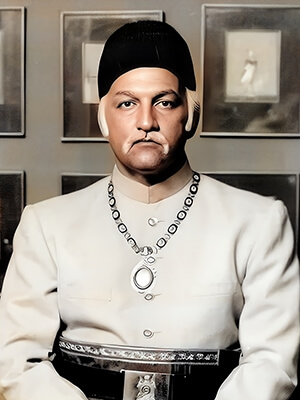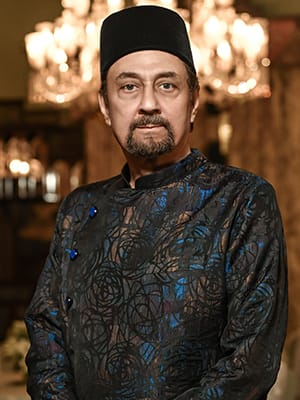
The Supreme Court on Wednesday (May 27) held that a rule of ‘primogeniture’ i.e., the eldest male heir alone inherits the royal estate or throne, would not apply to succession of the private properties of the former rulers, and such properties will devolve by way of personal succession laws.
“…the properties declared to be the personal private properties of the ruler would devolve not according to the rule of primogeniture but according to the personal law, whether Muslim Law or Hindu Law.”, the court held.
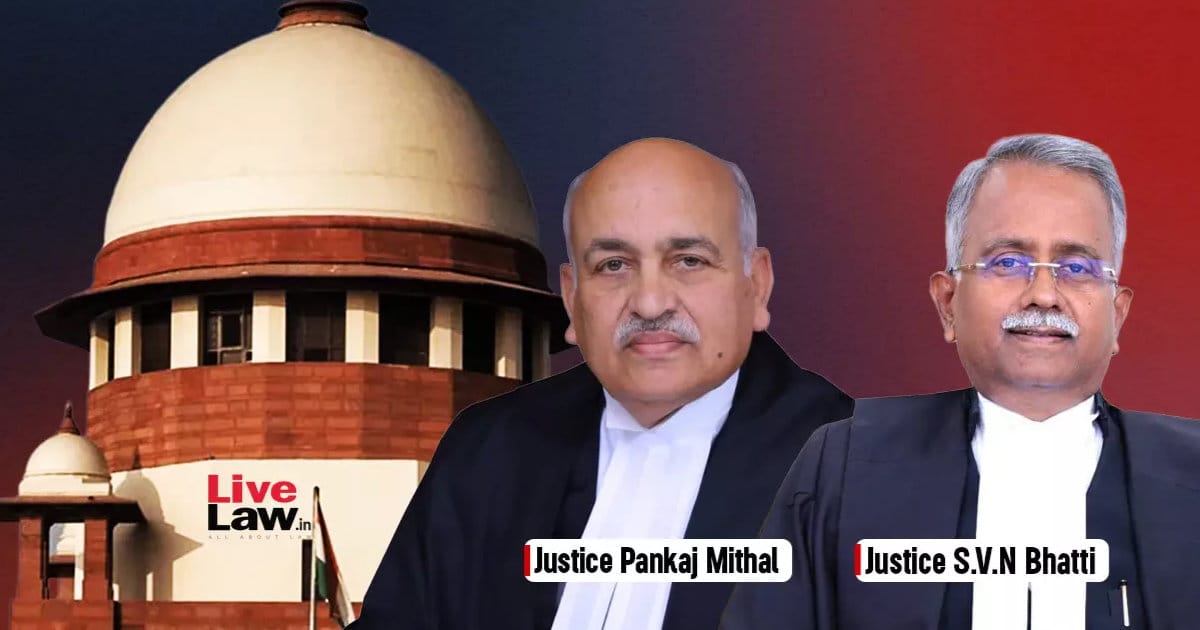
A bench of Justice Pankaj Mithal and Justice S.V.N. Bhatti set aside the Punjab & Haryana High Court judgment which had recognised Brigadier Sukhjit Singh as the exclusive successor to the private properties of late Maharaja Paramjit Singh under the rule of primogeniture, by virtue of being the eldest male lineal descendant after the abolition of princely rule.
The Court rejected the Respondent-Sukhjit Singh’s argument that the 1948 merger covenant recognized the succession of the private properties of the former rulers as per rule of ‘primogeniture’. Instead, the Court noted that Article XII of the covenant expressly recognised the ruler’s “full ownership, use and enjoyment” of all private properties declared by him, while Article XIV guaranteed succession according to custom only in respect of the Gaddi/Throne.
“…the covenant of merger only protected the succession to the Gaddi and to the personal rights according to law and custom or by rule of primogeniture but not with regard to the properties declared to be the private properties inasmuch as after the merger the ruler became a citizen of the country but with certain privileges, and without any sovereign control over public properties or over the subjects. Therefore, the succession to such private ancestral properties must be in accordance with the personal law of the ruler and not as per any custom or rule of primogeniture.”, the court observed.
Background
The litigation arose out of a prolonged family dispute within the erstwhile royal family of Kapurthala.
Two suits were instituted in 1977. In one suit, Brigadier Sukhjit Singh sought a declaration that certain properties, including the Kapurthala Villa and Mussoorie estate known as “Chateau & St. Helens,” were his exclusive personal properties. In the second suit, his estranged wife Smt. Gita Devi and their children sought partition, contending that the properties were ancestral coparcenary properties liable to division.
The dispute centered on whether the properties devolved according to the rule of primogeniture traditionally applicable to princely states, or under ordinary Hindu personal law.
The properties in dispute included residential and commercial properties in Delhi, Mussoorie estates, Kapurthala villas, jewellery, securities and other movable assets.
Aggrieved by the High Court’s decision to apply the rule of primogeniture for devolution of the private properties of the former Ruler in the Respondent’s favour, former ruler’s estranged wife moved to the Supreme Court.
Decision
Setting aside the impugned judgment, the judgment authored by Justice Mithal observed that the High Court erred in wrongly applying the precedent of Trijugi Narain (Dead) Through Lrs. & Ors vs Sankoo (Dead) Through Lrs. & Ors., 2019 SCC OnLine SC 1604 to extend the application of the Rule of primogeniture in the Respondent’s favour, despite a later three judge bench rulings in Maharani Deepinder Kaur v. Rajkumari Amrit Kaur, (2022) 9 SCC 658 and Talat Fatima Hasan v. Syed Murtaza Ali Khan, (2020) 15 SCC 655, which held that the guarantee under the Covenant was only in respect of succession to Gaddi and not to the private properties implying that the right to private properties of the ex-Ruler depends upon the personal law of succession to such private properties
“The covenant preserved the rule of primogeniture only in respect of succession to the Gaddi (throne) but in no way guaranteed this in respect of the private personal properties of the Maharaja; rather Article XII of the covenant clearly provided that the ruler of each covenanting State shall be entitled to full ownership, use and enjoyment of all private properties, as distinct from State properties, belonging to him, provided he furnished an inventory of all such properties by a particular date. This confirms that the covenant only protected the Maharaja’s full ownership, use and enjoyment of all private properties. These private properties were recognised as the properties belonging to the Maharaja as properties having been inherited from the family, but no rule of the covenant or any Article of the Constitution protected such private properties in the hands of the Maharaja from the ordinary rule of succession as applicable.”, the court observed.
Accordingly, the Court held:
“In view of the above discussion that the properties declared to be the private properties of the Maharaja would devolve according to Hindu Law/ Law of Succession and not by rule of primogeniture, the judgment and order of the learned Single Judge as well as of the Division Bench of the High Court which holds that the rule of primogeniture would prevail in the succession of properties is illegal and is unsustainable in law.”
Applying Hindu succession principles, the Supreme Court held that the Mussoorie properties known as “Chateau & St. Helens” were liable to partition among Brigadier Sukhjit Singh and the surviving children.
The Court also held that properties in Delhi jointly held by Brigadier Sukhjit Singh and Smt. Gita Devi would devolve according to ordinary succession rules after Gita Devi’s death.
Similarly, the Court ordered partition of Villa Bouna Vista at Kapurthala among the surviving heirs.
A preliminary decree for partition was accordingly directed to be drawn.
Cause Title: TIKKA SHATRUJIT SINGH & ORS. VERSUS SUKJIT SINGH & ANR.
Citation: 2026 LiveLaw (SC) 554
Appearance:
For Appellant(s) Mr. Nikhil Nayyar, Sr. Adv. (argued by), Mr. Ujjal Banerjee, AOR Mr. Divyanshu Rai, Adv. Ms. Taruna, Adv. Mr. Anmol Sehgal, Adv. Mr. Shrikant Ramteke, Adv. Mr. Nikhil R.T., Adv. Mr. Shubham Jain, Adv. Mr. Deeptam Bhadauria, Adv.
For Respondent(s)/ R-1 Mr. Santosh Paul, Sr. Adv. (argued by), Dr. Arun Mohan, Sr. Adv. (argued by) Mr. Sameer Parekh, Adv. Mr. D.P. Mohanty, Adv. Ms. Chitra Mehendale, Adv. Mr. Arvind Bhatt, Adv. Ms. Swati Bhardwaj, Adv. Ms. Pratyusha Priyadarshini, Adv. Ms. Shriya Kesharwani, Adv. Mr. Siddharth Samaiya, Adv. Ms. Swastika Singh, Adv. Mr. Vinayak Bhandari, Adv. Ms. Ritika Choubey, Adv. Ms. Aditi Rai, Adv. Mr. Vedant Mishra, Adv. Mr. Aditya Sonawane, Adv. Mr. Rakshha, Adv. M/s. Parekh & Co., AOR
R-2 Mr. Raj Shekhar Rao, Sr. Adv. (argued by), Mr. Shashi Bhushan Kumar, AOR Ms. Aashana Chawla, Adv. Ms. Rajarshi Roy, Adv. Ms. Advaita Bhushan, Adv.